
Understanding Mahjong Tiles: Meanings and Origins Explained
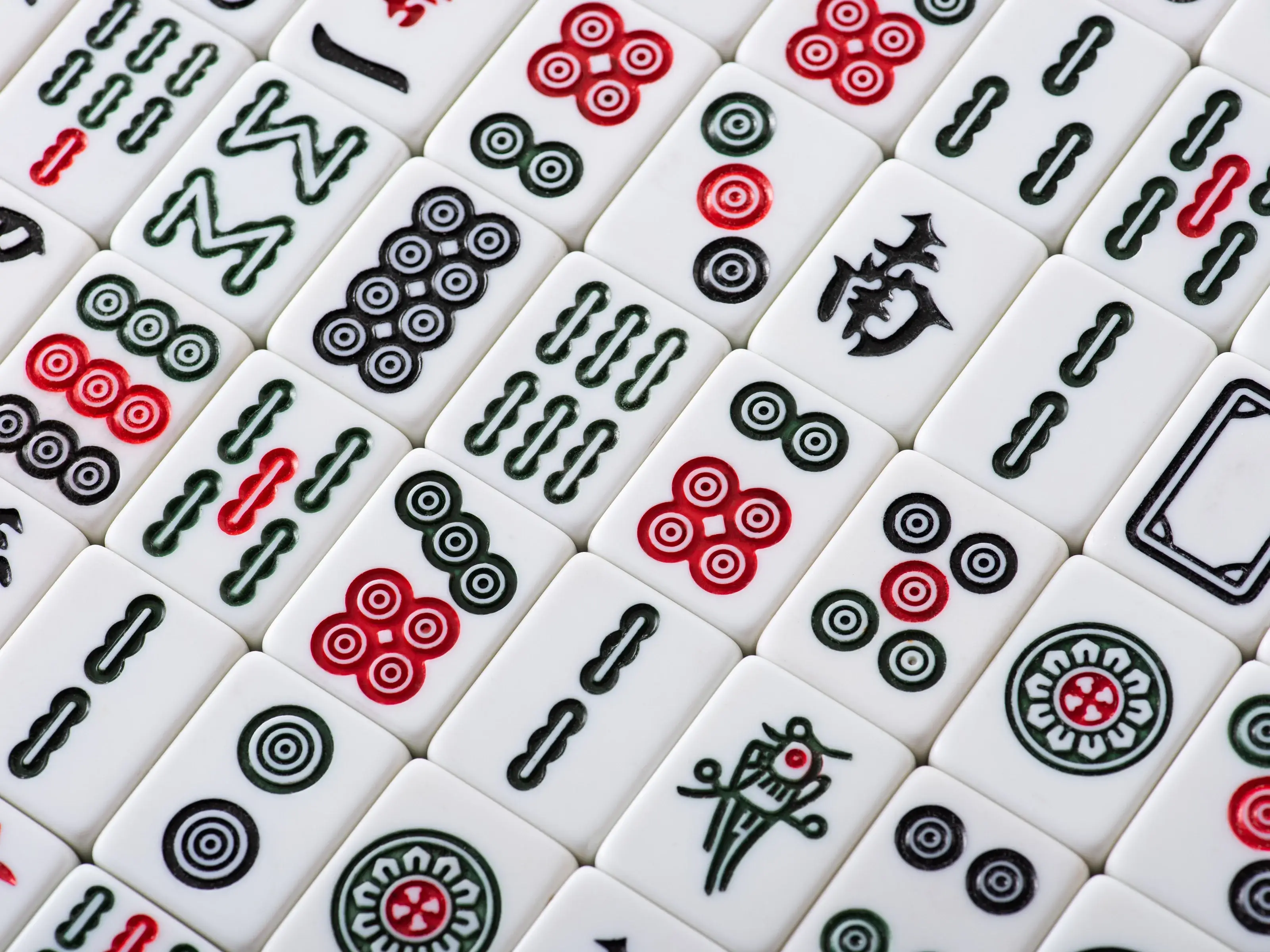
Mahjong tiles carry rich symbolism and cultural significance that enhance the gameplay experience. Learning the meanings behind these intricate pieces not only improves your strategic abilities but also connects you to centuries of Chinese tradition dating back to the Qing Dynasty. At TheMahjong.com, our team of Mahjong experts has researched the historical and cultural context of each tile to provide you with accurate, detailed information about this fascinating game.
Overview Of Mahjong Tile Categories
A complete Mahjong set consists of 144 tiles divided into distinct categories, each with specific functions and meanings. The tiles feature ancient symbols that tell stories of Chinese culture and philosophy. Understanding these categories is the first step to mastering the game.
- Suited Tiles: Three main suits (Bamboo, Circles, Characters) with numbers 1-9 in each, totaling 108 tiles
- Honor Tiles: Winds and Dragons that represent natural elements and cosmic forces
- Bonus Tiles: Flowers and Seasons that add scoring opportunities and cultural connections
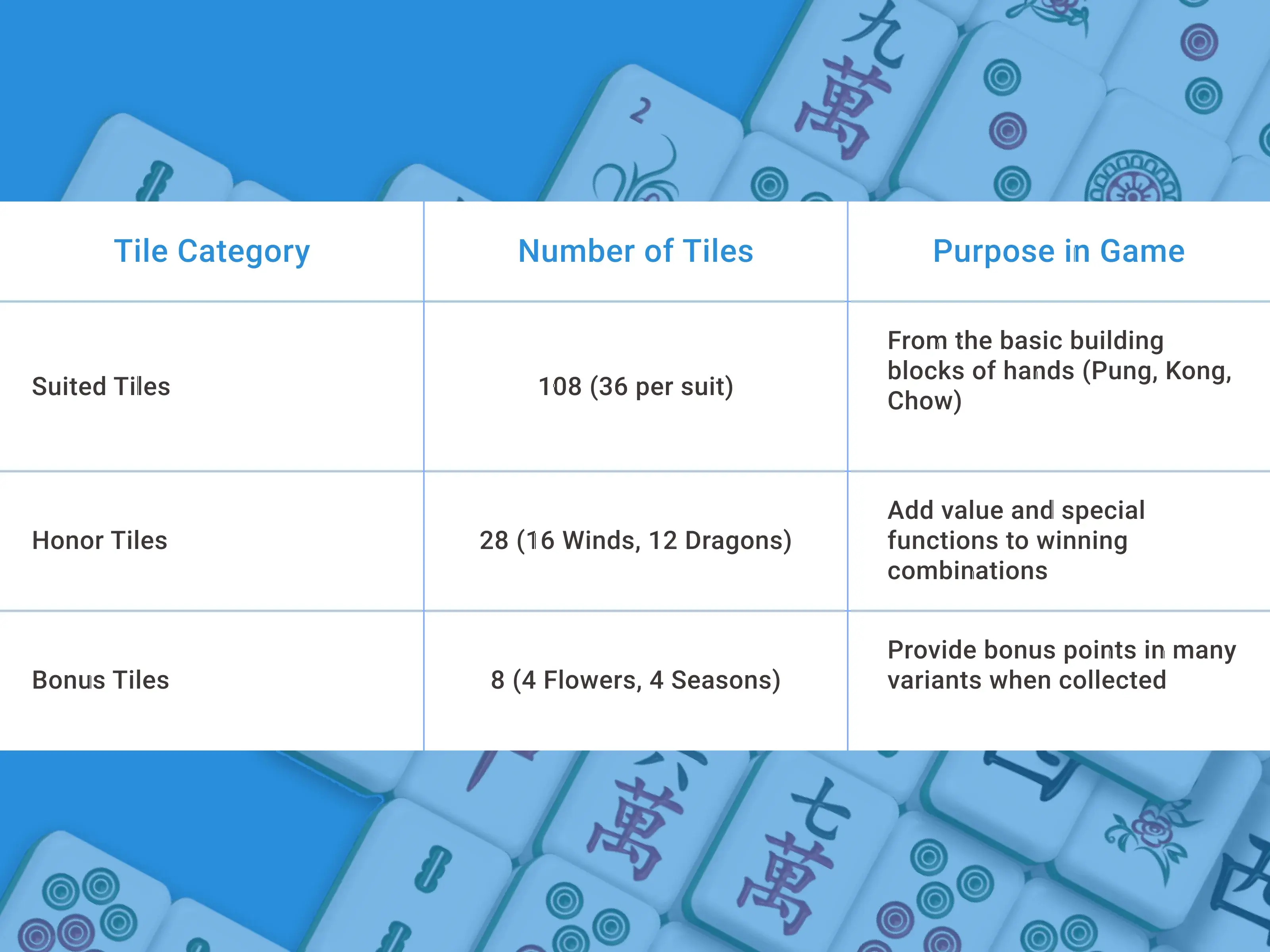
Suited Tiles
- Number of tiles: 108 (36 per suit)
- Purpose in game: Form the basic building blocks of hands (Pung, Kong, Chow)
Honor Tiles
- Number of tiles: 28 (16 Winds, 12 Dragons)
- Purpose in game: Add value and special functions to winning combinations
Bonus Tiles
- Number of tiles: 8 (4 Flowers, 4 Seasons)
- Purpose in game: Provide bonus points in many variants when collected
Origins And Symbolism Of Mahjong Suits
The three main suits in Mahjong originated during the Ming Dynasty (1368-1644) in China, with each representing different aspects of daily life and commerce in ancient Chinese society.
Bamboo Or Sticks
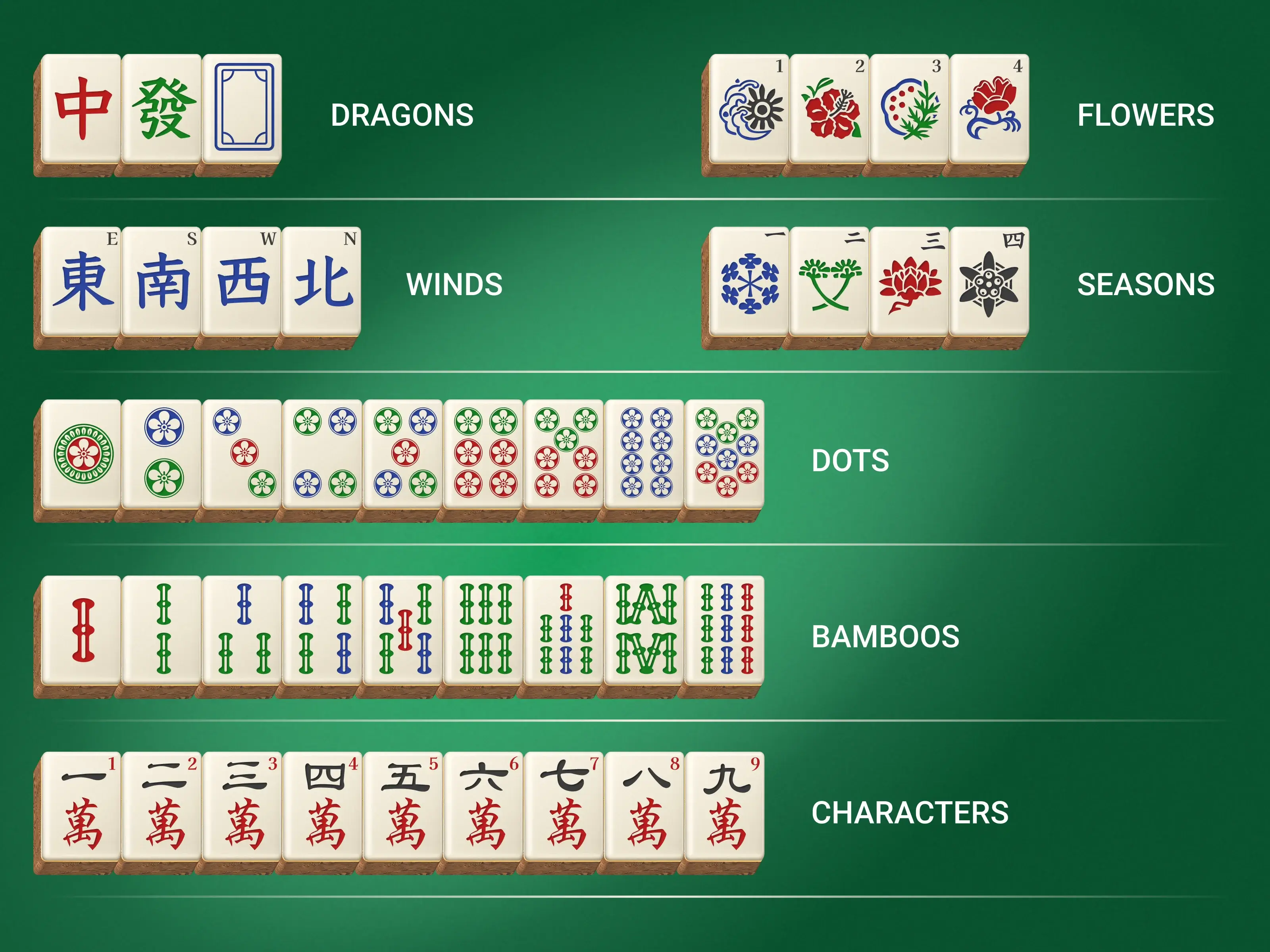
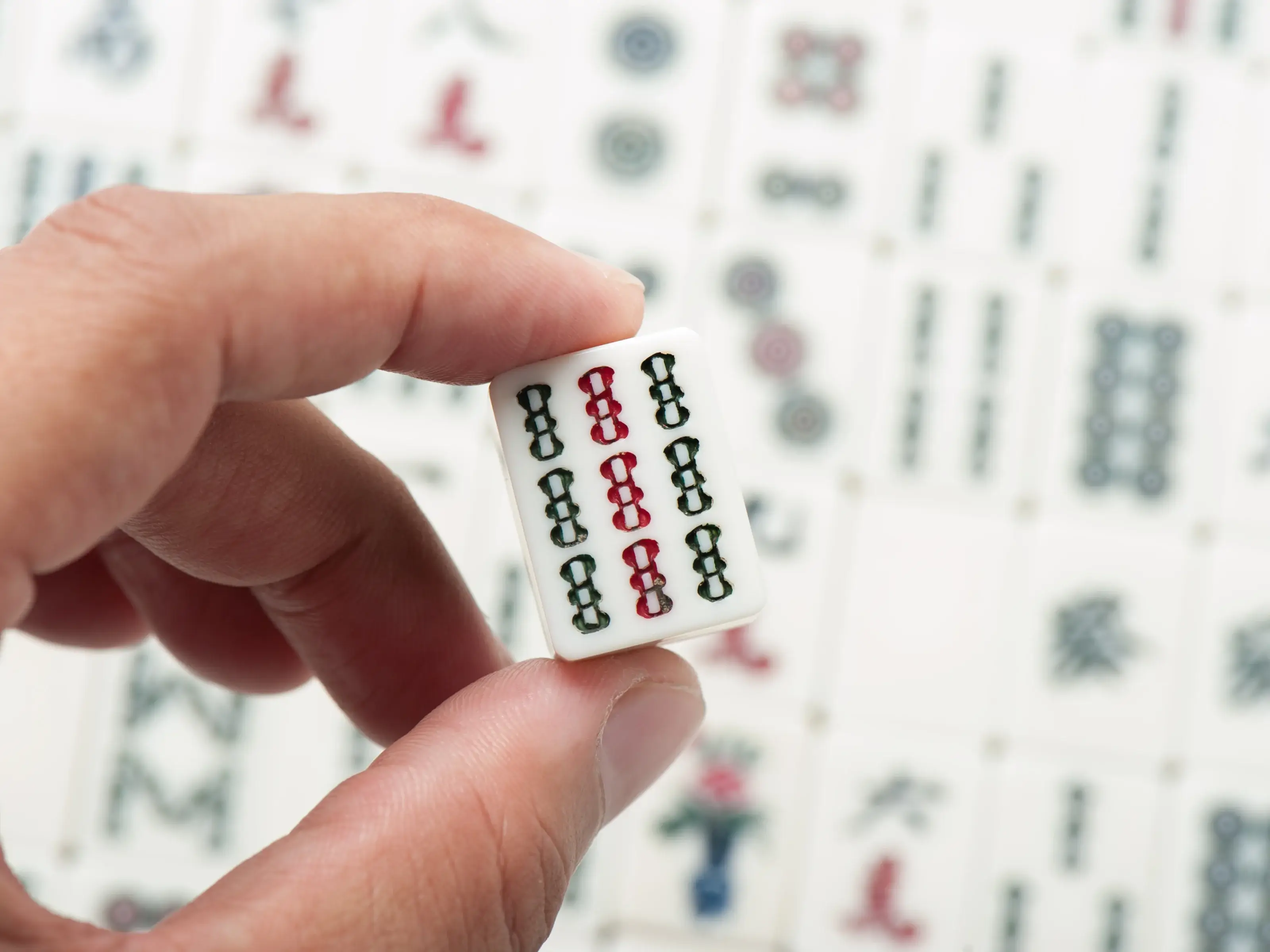
The Bamboo suit (also called Bams or Sou in Japanese Mahjong) originally represented strings of coins tied together with string in ancient Chinese monetary systems. Historians note that the 1 of Bamboo doesn't show a bamboo stick at all—it displays a bird, typically a peacock or phoenix. This distinctive design, dating back to the earliest Mahjong sets, helps players quickly identify the tile while symbolizing flight and aspiration. In Chinese culture, bamboo represents resilience, strength, and growth—qualities valued both in life and gameplay strategy.
Circles Or Dots
Circles (also called Dots or Tong, and Pin in Japanese Mahjong) directly represent ancient Chinese copper coins (cash coins) that had square holes in their centers for stringing together. The patterns of dots on these tiles symbolize wealth, prosperity, and good fortune. Each tile displays its number value through the arrangement of the circles—three circles for the 3 of Dots, six for the 6 of Dots—creating an intuitive visual system that transcends language barriers and dates back to the currency used during the Tang and Song dynasties.
Characters Or Numbers
The Character suit (also called Craks, Wan, or Man in Japanese Mahjong) features Chinese numerals alongside the character for "ten thousand" (萬/万), representing abundance. These tiles connect players directly to Chinese written language and numerical concepts. Classical Mahjong scholars note that the Character suit holds particular cultural significance as the character for ten thousand represents limitless abundance in traditional Chinese philosophy.
Key Character tiles include:
- 1 of Characters: 一萬 (yi wan) - represents beginnings and unity in Taoist philosophy
- 5 of Characters: 五萬 (wu wan) - considered balanced and harmonious, representing the five elements
- 9 of Characters: 九萬 (jiu wan) - symbolizes completeness and fulfillment (nine being the highest single digit)
Honor Tiles and Their Cultural Significance
Honor tiles transcend numerical values, connecting instead to elemental forces and cosmic balance in Chinese philosophy. Archaeological evidence suggests these concepts were incorporated into the game during the late 19th century.
The Four Winds
The Wind tiles represent the four cardinal directions from ancient Chinese cosmology and carry associations with seasons, elements, and cosmic energy:
- East Wind (東/dong): Associated with spring, wood element, and new beginnings
- South Wind (南/nan): Connected to summer, fire element, and growth
- West Wind (西/xi): Represents autumn, metal element, and harvest
- North Wind (北/bei): Symbolizes winter, water element, and reflection
In traditional play, the East Wind holds special significance as the prevailing wind that begins each round, determining seating arrangements and turn order. This connection to directional energy reflects the Chinese concept of natural cycles and balance found in classical texts like the I Ching.
The Three Dragon Tiles
Dragon tiles represent powerful forces in Chinese philosophy and culture, added to Mahjong sets during their standardization in the early 20th century:
- Red Dragon (中/zhong): The character means "center" or "middle," symbolizing balance and the achievement of goals
- Green Dragon (發/fa): Associated with prosperity as the character means "to emit" or "to prosper"
- White Dragon: Represents purity and is sometimes depicted as a blank tile or with a blue border
These dragons bring both strategic advantage and symbolic power to your Mahjong hands, connecting gameplay to deeper cultural concepts from Confucian and Taoist traditions.
Flower and Season Tiles In Chinese Mahjong Tiles
Flower and Season tiles, added to enhance the game's cultural significance around 1900, provide visual beauty and scoring opportunities. Unlike the suited and honor tiles, these bonus tiles are not used to form sets but are collected for points.
The Flower tiles depict the "Four Gentlemen" of Chinese art:
- Plum blossom (representing winter and perseverance)
- Orchid (spring and elegance)
- Bamboo (summer and integrity)
- Chrysanthemum (autumn and nobility)
Season tiles correspond to the four seasons and are paired conceptually with the four winds:
- Spring (East Wind)
- Summer (South Wind)
- Autumn (West Wind)
- Winter (North Wind)
For a unique visual experience with these beautiful tiles, try our Turtle Mahjong game which features clear, vibrant tile designs based on traditional Chinese art motifs.
Variations In Mahjong Tile Designs Across Regions
While the core meanings remain consistent, Mahjong tile designs vary significantly across different regions and cultures, reflecting their adaptation since the game's global spread in the 1920s:
- Chinese sets: Feature traditional characters with rich detail and historical symbolism
- Japanese sets: Often use simplified designs with distinctive red and black coloring
- American sets: May include additional jokers and special tiles for unique scoring combinations
Modern Mahjong sets might showcase contemporary artistic interpretations while maintaining the traditional meanings. Some luxury sets use materials like jade, bone, or precious woods, while others embrace colorful modern aesthetics without losing the essence of the traditional symbols.
Tips For Remembering Mahjong Tile Names and Meanings
Make Visual Connections
Form memory associations based on the tiles' appearances. See the Circles as ancient coins in a merchant's purse, the Bamboo as growing plants of different heights, and the Characters as a counting system. These visual connections make recalling tile meanings intuitive during gameplay.
Learn Basic Chinese Characters
Become familiar with the fundamental Chinese numerals 1-9 that appear on the Character tiles. Understanding these basic elements of Chinese writing enhances your connection to the game's cultural heritage and makes identifying tiles faster during play.
Regular Practice With Online Games
Playing Mahjong Solitaire regularly helps reinforce tile recognition. Our Tile Fighter Mahjong offers an excellent way to practice identifying different tile types while enjoying challenging layouts designed by Mahjong experts.
The Value Of Mahjong Symbols
Understanding Mahjong tile meanings transforms your gameplay experience by:
- Deepening your appreciation for the game's rich cultural heritage
- Improving your strategic thinking through better tile recognition
- Creating meaningful connections to Chinese philosophy and artistic traditions
The symbols on Mahjong tiles tell stories that span centuries, linking players to traditions that have brought joy and mental stimulation across generations and cultures.
Ready to apply your knowledge of Mahjong tiles? Play free Mahjong games on TheMahjong.com and test your understanding of these ancient symbols while enjoying one of the world's most enduring games.
FAQs About Mahjong Tile Meanings
What do the three dragon tiles in mahjong represent?
The three dragon tiles represent powerful forces in Chinese philosophy. The Red Dragon (中) means "center," symbolizing balance and achievement. The Green Dragon (發) represents prosperity and growth. The White Dragon signifies purity and is often depicted as blank or with a blue border. These tiles connect gameplay to Confucian and Taoist traditions.
Why does the one bamboo tile show a bird instead of bamboo?
The 1 of Bamboo displays a bird—typically a peacock or phoenix—rather than a bamboo stick, a design dating back to the earliest Mahjong sets. This distinctive feature helps players quickly identify the tile while symbolizing flight and aspiration in Chinese culture. The unique design distinguishes it from other bamboo tiles in the suit.
How do mahjong tiles differ between Chinese and American sets?
Chinese sets feature traditional characters with rich historical symbolism and detailed artwork. American sets often include additional jokers and special tiles for unique scoring combinations not found in traditional Chinese Mahjong. Japanese sets use simplified designs with distinctive red and black coloring. Despite these variations, core tile meanings remain consistent across regions.
What is the significance of the flower tiles in mahjong?
Flower tiles depict the "Four Gentlemen" of Chinese art: plum blossom (winter, perseverance), orchid (spring, elegance), bamboo (summer, integrity), and chrysanthemum (autumn, nobility). Added around 1900, these bonus tiles provide scoring opportunities and connect players to traditional Chinese artistic and philosophical concepts rather than forming standard tile combinations.
Other Mahjong News
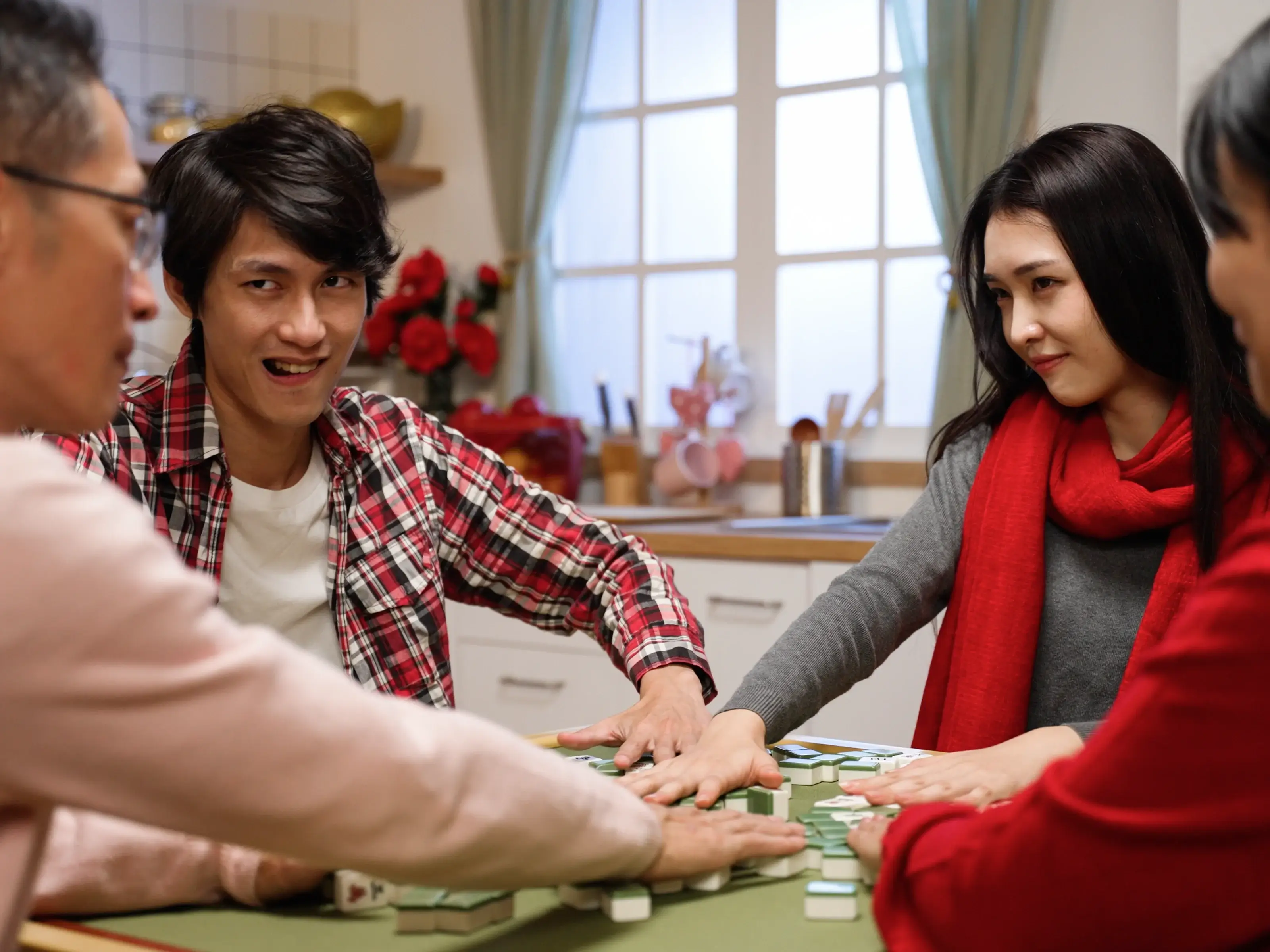
Try out the Mahjong gameplay practices on TheMahjong.com
Playing Mahjong at TheMahjong.com offers not just an interesting and exciting pastime, but also an excellent way to improve cognitive skills. Here, you can refine your logical thinking, planning, and visual perception. We invite you to discover this unique world of Mahjong Solitaire and dive into an exciting adventure at TheMahjong.com!