
Mahjong vs Rummikub: Key Similarities & Differences
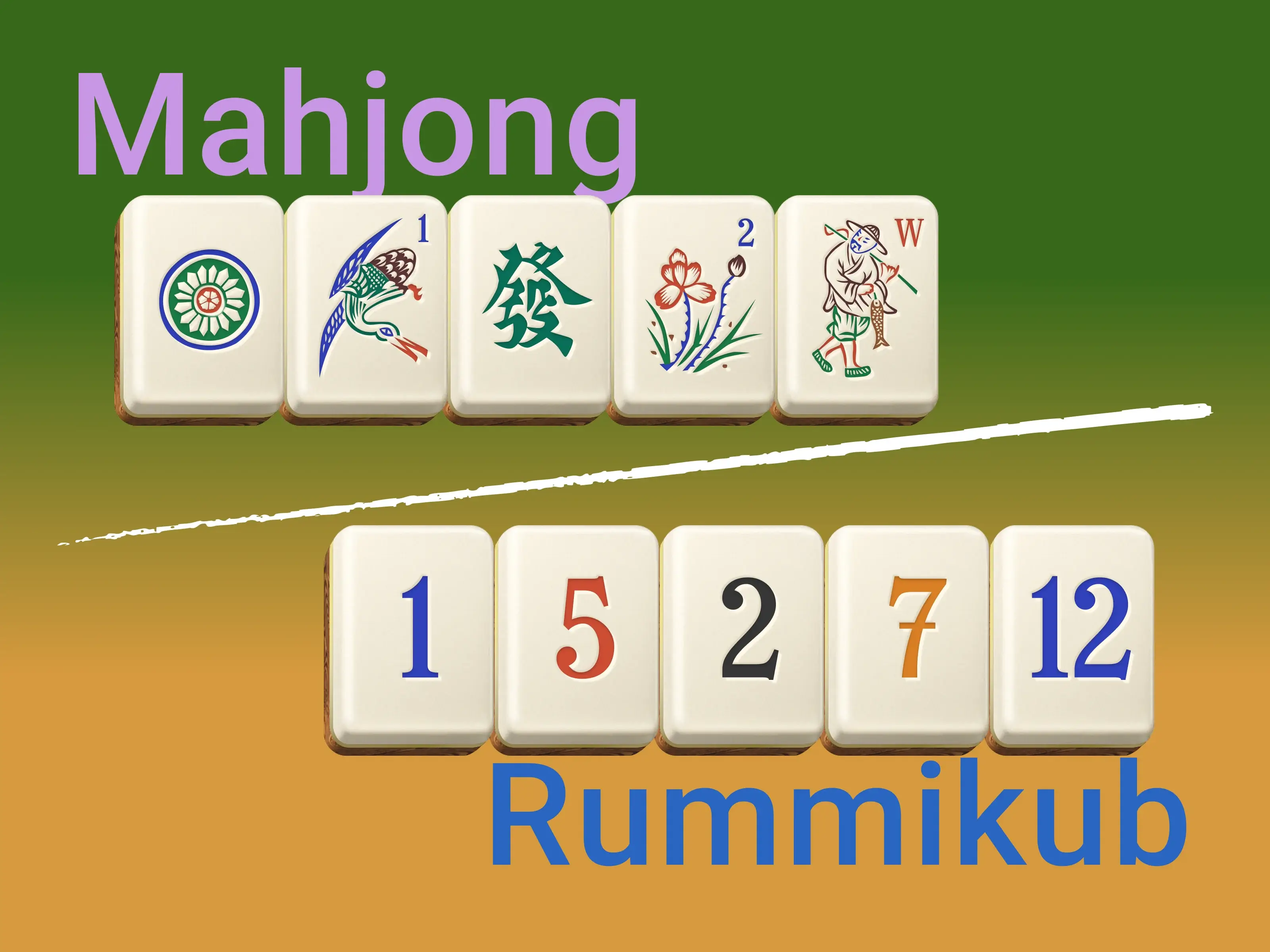
Tile-based games offer engaging challenges for players seeking mental stimulation and social entertainment. Mahjong and Rummikub represent two distinct approaches to tile gaming, each with unique mechanics and appeal.
What Makes These Tile Games Unique
Mahjong and Rummikub are both popular tile-based games, but they differ significantly in complexity, origins, and gameplay mechanics. While both games use tiles, Rummikub is generally considered easier to learn, whereas Mahjong features more complex rules and symbolic elements.
Key distinctions include:
- Game Origin: Mahjong originated in 19th century China with deep cultural significance, while Rummikub was created in the 1940s by Ephraim Hertzano in Romania.
- Complexity Level: Mahjong has a higher learning curve with multiple rule variations, whereas Rummikub offers more straightforward gameplay accessible for beginners.
- Game Objective: In Mahjong, the goal is to form a complete hand of sets and pairs; in Rummikub, the objective is to be the first to play all your tiles by forming sets and runs.
- Strategic Depth: Mahjong requires long-term planning, memory, and reading opponents, while Rummikub focuses on tactical tile manipulation and adaptability.
After playing thousands of games of both Mahjong and Rummikub, we've observed that players typically gravitate toward one or the other based on these fundamental differences.
Tiles and Components Compared
Both games use distinctive tiles, but their components differ in complexity and symbolism. Mahjong uses 136-144 tiles featuring suits, honors, and sometimes bonus tiles, each with rich cultural symbolism. Rummikub uses a simpler set of 106 tiles, numbered 1-13 in four colors, plus jokers.
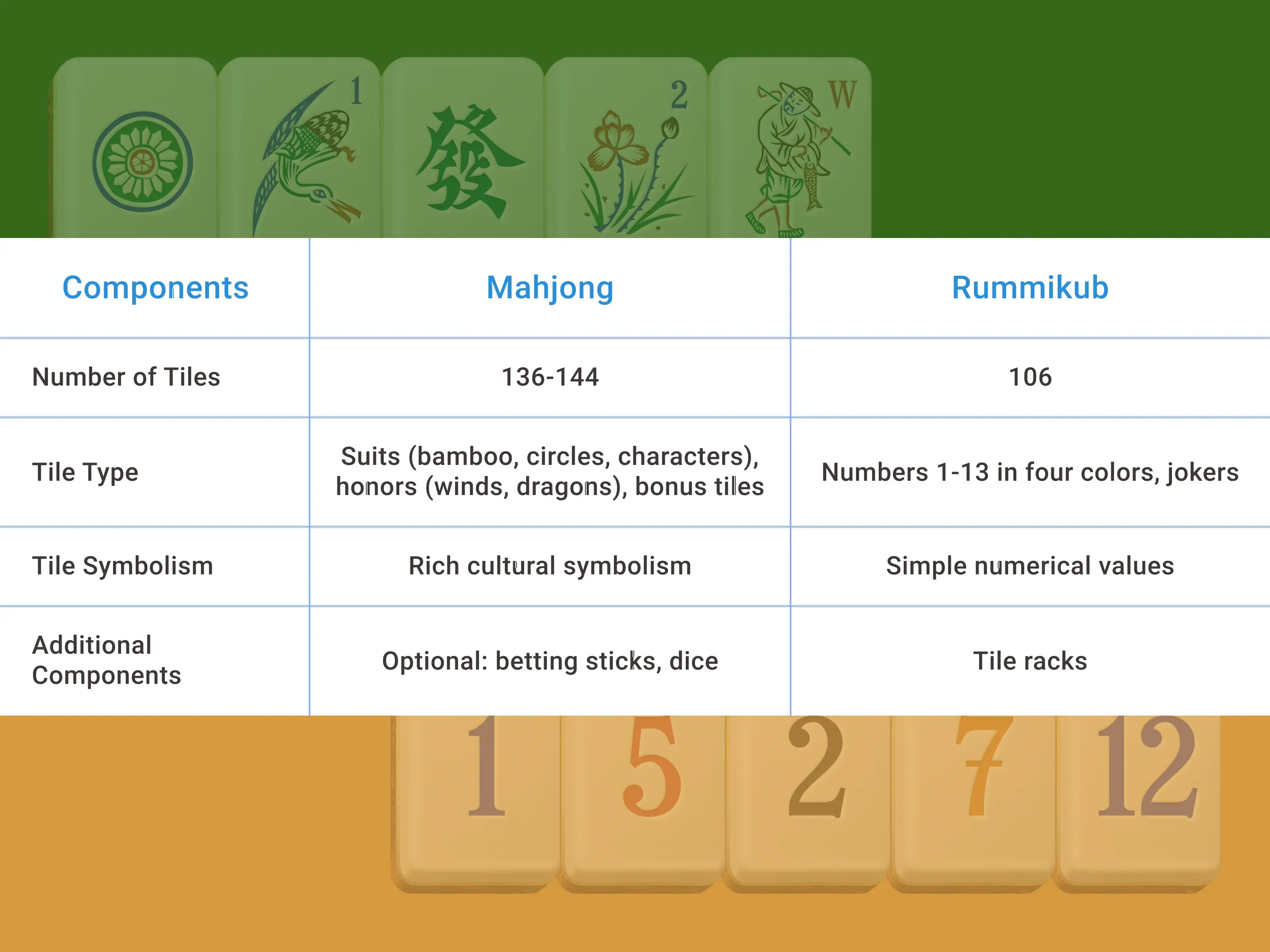
Number of Tiles
- Mahjong: 136–144 tiles
- Rummikub: 106 tiles
Tile Types
- Mahjong: Suits (bamboo, circles, characters), honors (winds, dragons), bonus tiles
- Rummikub: Numbers 1–13 in four colors, jokers
Tile Symbolism
- Mahjong: Rich cultural symbolism
- Rummikub: Simple numerical values
Additional Components
- Mahjong: Optional: betting sticks, dice
- Rummikub: Tile racks
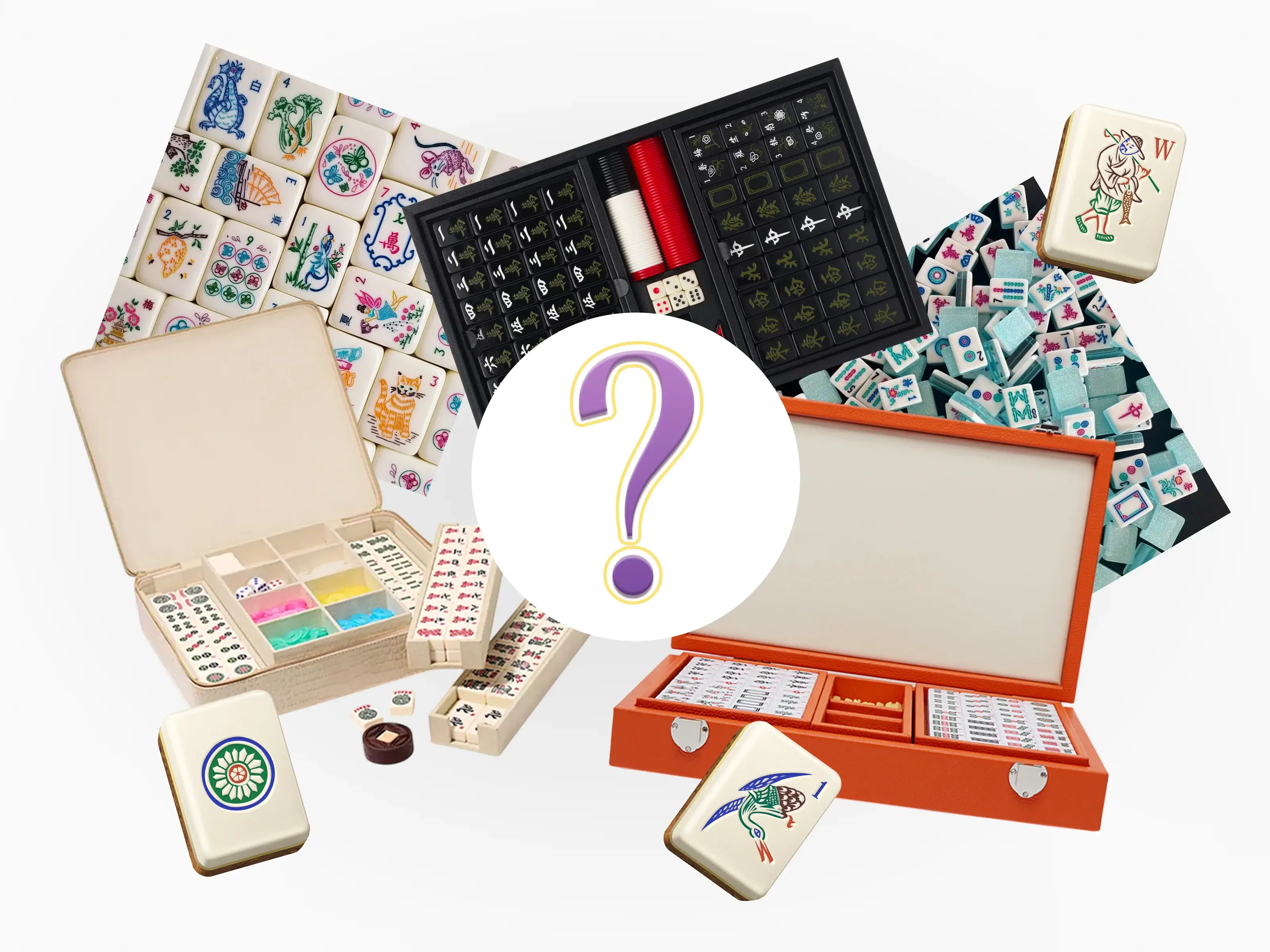
The visual complexity of Mahjong tiles can be intimidating for beginners, while Rummikub's numbered tiles are more approachable. However, Mahjong's tile designs offer aesthetic appeal and historical significance that many players find captivating. Our collection at TheMahjong.com showcases these beautiful traditional designs in our digital versions.
How To Play Each Game
The gameplay mechanics of Mahjong and Rummikub differ significantly, which can help players decide which game suits their preferences. Our experts have broken down the essential rules for both games.
1. Mahjong Basic Steps
- Each player starts with 13 tiles.
- Players draw and discard tiles in turn.
- The goal is to form sets (pungs, kongs, chows) and a pair.
- Players can call for discarded tiles to complete sets.
- When a player completes a legal hand, they declare "Mahjong" and win the round.
Note: There are multiple variants of Mahjong with different rules, but these are the most common elements. You can experience a simplified version at TheMahjong.com, where we've designed our Mahjong Solitaire games based on traditional matching principles.
2. Rummikub Basic Steps
- Each player starts with 14 tiles on their rack.
- The first meld must total at least 30 points.
- Players create sets (same number, different colors) and runs (consecutive numbers, same color).
- Players can manipulate and rearrange tiles already on the table.
- Jokers can be used as wild tiles.
- The first player to play all their tiles wins.
From our experience hosting tournaments of both games, we've seen that Rummikub's table manipulation mechanics create a different strategic experience than Mahjong's hand-building approach.
Scoring and Winning Methods
The scoring systems in Mahjong and Rummikub reflect their different philosophies. Having scored countless games, our experts provide this detailed breakdown.
1. Mahjong Score Basics
- Scores depend on the composition of the winning hand and how it was formed.
- Different variants have different scoring systems - Hong Kong, Chinese Official, and American National Mah Jongg League rules all score differently.
- Common scoring patterns include specific sets or rare hands like "Thirteen Orphans."
- In competitive play, scoring can involve complex calculations based on winds, dragons, and how the winning tile was acquired.
2. Rummikub Score Basics
- The winner scores based on the total value of tiles left on opponents' racks.
- Each tile's number value translates directly to points (e.g., a "12" tile equals 12 points).
- In tournament play, players typically play to 100 points across multiple rounds.
- The system rewards efficiency and speed rather than complex pattern building.
This comparison highlights how Mahjong rewards pattern complexity while Rummikub favors rapid play and adaptability.
Skill Vs Luck
Both games involve elements of chance, but they reward different types of skills based on our analysis of expert play:
- Pattern Recognition: Essential in both, but Mahjong's patterns are more complex and varied. Expert Mahjong players can recognize potential hand patterns within 2-3 turns.
- Memory Skills: Crucial in Mahjong for tracking 34 different tile types through discards; less important in Rummikub where all played tiles remain visible.
- Adaptability: Key in Rummikub due to the constantly changing board. Top players can mentally map 5+ potential moves ahead.
- Planning: Mahjong requires long-term planning toward specific hand patterns; Rummikub focuses on short-term tactical opportunities.
- Probability Assessment: Used differently in each game to anticipate draws and discards.
After teaching both games to hundreds of new players, we've observed that Mahjong typically rewards dedicated players who master its strategic elements, while Rummikub offers a more accessible blend of luck and tactics.
Cultural Roots and Popularity
Mahjong has deep cultural roots in China and is associated with various traditions and regional variants. The game arrived in America in the 1920s and gained popularity particularly among Jewish-American women in the mid-20th century. Today, the American National Mah Jongg League has over 350,000 members.
- Mahjong features distinct regional variations like Chinese Classical, Japanese Riichi, and American Mahjong.
- Rummikub has won multiple game of the year awards and is sold in over 50 countries.
- Mahjong is often played in dedicated clubs and social gatherings with established etiquette and customs.
- Both games foster social interaction and community, which our online community at TheMahjong.com continues in the digital space.
Why Mahjong Appeals To Strategy Enthusiasts
Mahjong is particularly appealing to players who enjoy deep strategy. The game requires layered decision-making, reading opponents, and long-term planning.
Cognitive benefits include:
- Enhanced pattern recognition through tracking multiple potential hands simultaneously
- Improved memory for tracking discarded tiles across multiple rounds
- Strategic thinking development through risk/reward calculations
- Social interaction through the ritual elements of the game
- Increased concentration and focus during extended play sessions
Players can experience some of these benefits through unique variants like our Abstract Building Free Mahjong, which we've designed to emphasize the pattern recognition skills similar to traditional Mahjong.
Finding Online Versions For Fast Fun
Both Mahjong and Rummikub have adapted well to the digital era. Our team has tested dozens of digital implementations to find the best options.
- Digital versions offer automatic scoring, tutorials, and the ability to play anytime.
- At TheMahjong.com, we provide free Mahjong Solitaire with over 200 expertly designed layouts.
- Our mobile-optimized games allow for seamless play across devices.
- Based on player feedback, we've found that online play offers convenience and accessibility while preserving the core strategic elements that make these games special.
Where To Begin Your Journey
For beginners interested in Mahjong or Rummikub, here are some practical steps based on our experience teaching thousands of new players:
- Start with a basic set or play online - we recommend beginning with Mahjong Solitaire to learn the tiles.
- Use online tutorials and guides to learn the rules - our guides at TheMahjong.com break down concepts step by step.
- Join local clubs or online communities to find other players - many cities have dedicated Mahjong groups that welcome beginners.
- Expect a steeper learning curve for Mahjong compared to Rummikub - most players need 3-5 games to grasp basic Mahjong strategy.
- Try our beginner-friendly layouts at TheMahjong.com as an accessible introduction to tile-matching games.
Both games offer rewarding experiences for different types of players, but Mahjong stands out for its rich tradition and strategic depth.
Frequently Asked Questions About Mahjong And Rummikub
Is Rummikub Similar To Mahjong?
Rummikub shares the tile-based format with Mahjong but features simpler rules focused on creating number sets and runs, while Mahjong involves more complex patterns and cultural symbolism. You can experience authentic Mahjong gameplay at TheMahjong.com to see the differences yourself.
Do Neurologists Recommend Playing Mahjong?
Many neurologists support Mahjong as a beneficial activity for cognitive health because it exercises memory, pattern recognition, and strategic thinking skills. Our Abstract Building Free Mahjong was designed with these cognitive benefits in mind.
Why Do Many Jewish Communities Enjoy Mahjong?
Mahjong became popular in Jewish communities, particularly among women, in mid-20th century America as a social activity that fostered community connections while offering intellectual engagement. This tradition continues today with many dedicated groups.
What Other Games Resemble Mahjong?
Rummy card games share conceptual similarities with Mahjong in forming sets and sequences, while Dominoes offers similar tile-matching mechanics but with simpler gameplay. You can explore various tile-matching mechanics through our diverse layout collection at TheMahjong.com.
Other Mahjong News


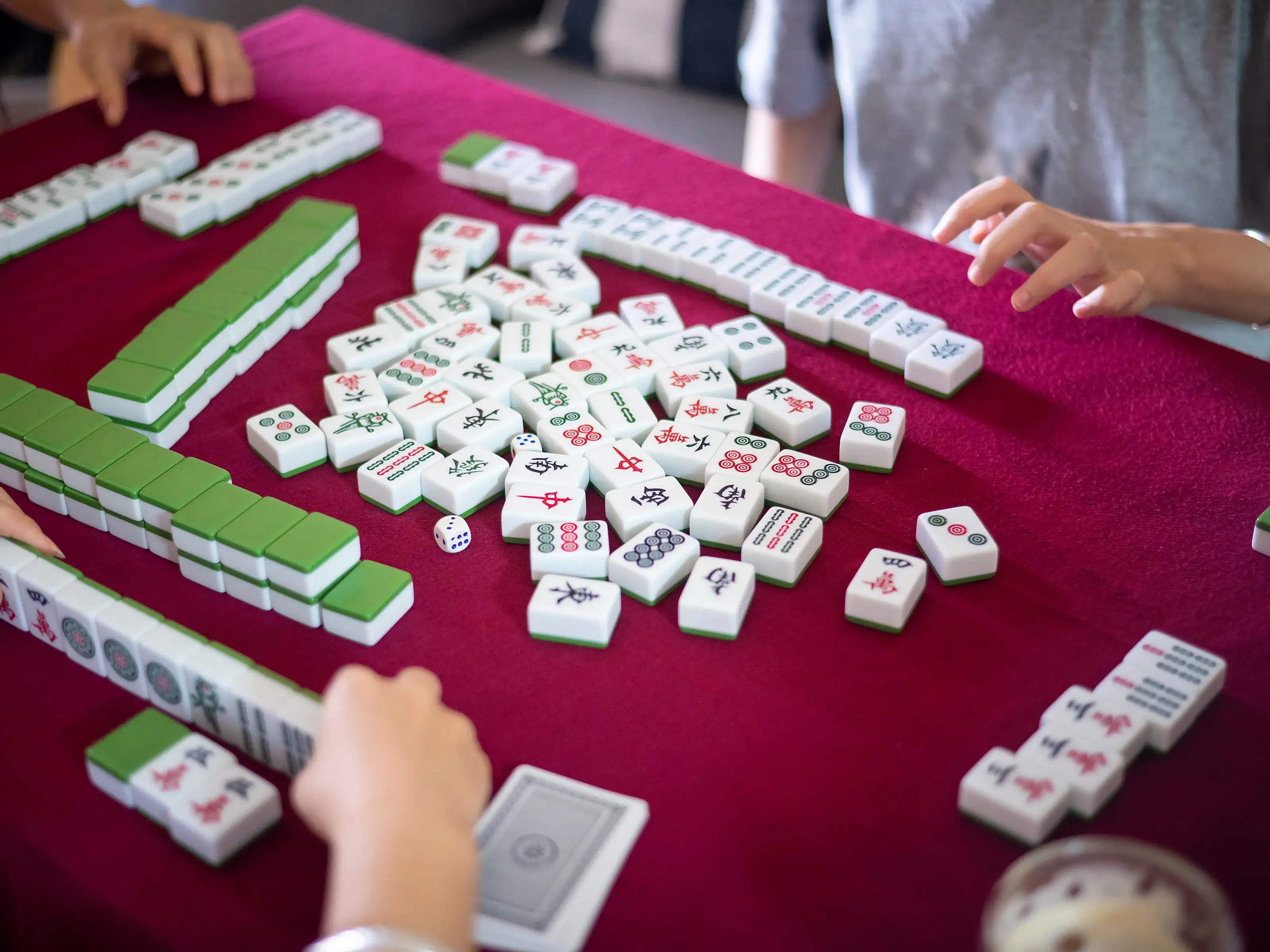
Try out the Mahjong gameplay practices on TheMahjong.com
Playing Mahjong at TheMahjong.com offers not just an interesting and exciting pastime, but also an excellent way to improve cognitive skills. Here, you can refine your logical thinking, planning, and visual perception. We invite you to discover this unique world of Mahjong Solitaire and dive into an exciting adventure at TheMahjong.com!