
Mahjong Wait Types Explained (With Examples)
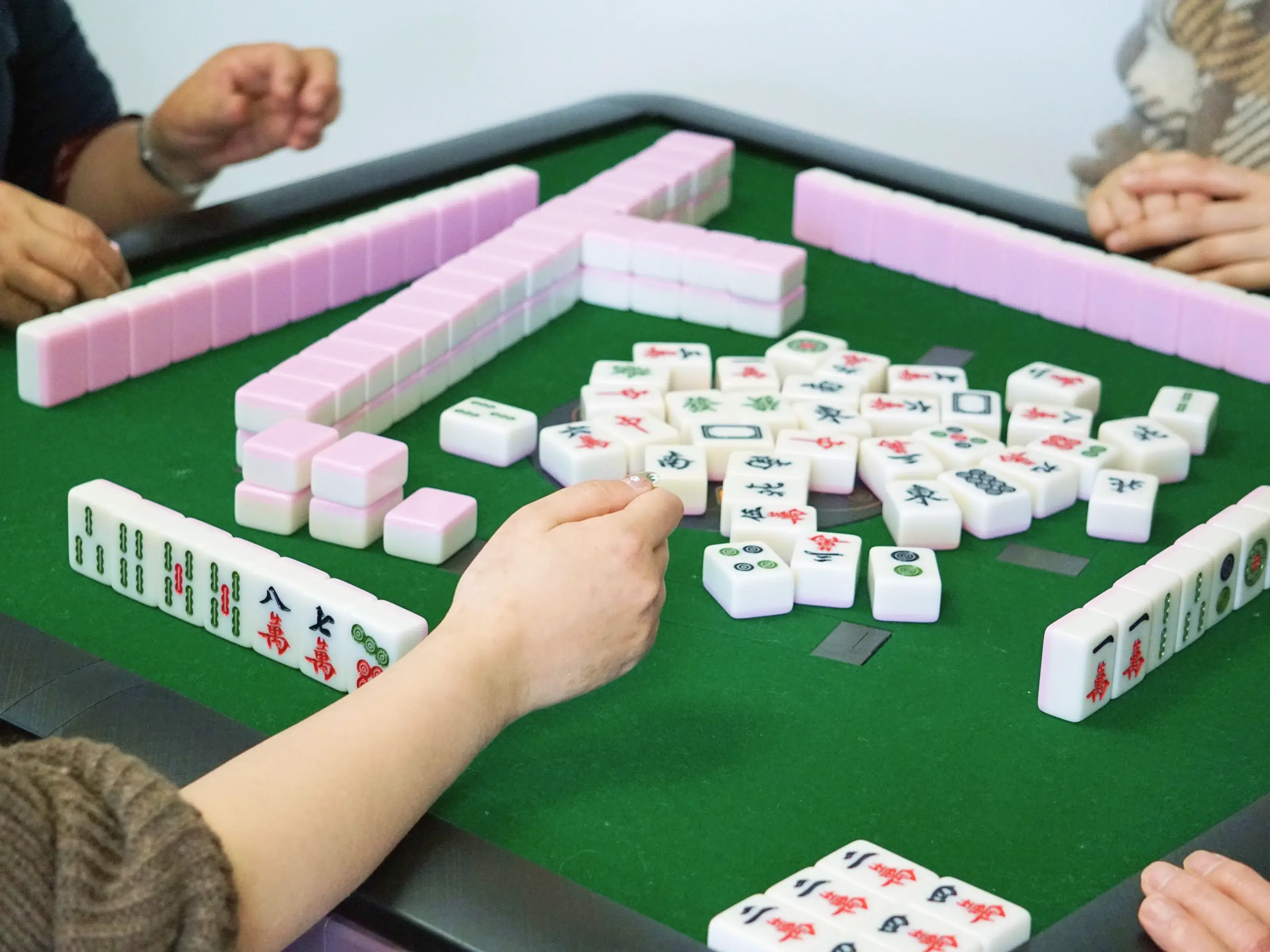
A mahjong wait (also called "machi" in Japanese mahjong) refers to the specific tile or tiles you need to complete your hand when you're one tile away from winning—a state known as "tenpai." The type of wait you have determines which tiles can finish your hand and directly affects your winning probability. A ryanmen wait accepting two different tile types gives you eight potential winning tiles, while a tanki wait for a single specific tile leaves you with only three or four. Learning to recognize and evaluate these patterns separates casual players from strategic ones, influencing everything from your discard choices to riichi timing.
What Are Mahjong Wait Types
Wait types describe the tile patterns that determine what you need to complete your hand in tenpai. Each wait type has a different number of possible winning tiles, which affects both your speed to victory and the difficulty opponents face in reading your hand. Understanding wait structures helps you assess whether to push aggressively toward tenpai or hold back to improve your hand shape.
The five fundamental wait types are:
- Ryanmen (open wait): Waiting on either end of two consecutive tiles (like 4-5 accepting 3 or 6)
- Kanchan (closed wait): Waiting for the middle tile in a gapped sequence (like 3-5 needing 4)
- Penchan (edge wait): Waiting at 1-2 or 8-9 sequences (like 1-2 needing 3, or 8-9 needing 7)
- Shanpon (dual pon wait): Two pairs where either can complete a triplet (like holding two 5-dots and two 7-characters)
- Tanki (pair wait): Waiting for one tile to complete your final pair (the head of your hand)
Since mahjong uses four copies of each tile, your maximum winning tiles depend on how many remain in the wall after accounting for visible tiles in discards, exposed sets, and your own hand. A ryanmen wait with eight potential winning tiles (four each of two types) wins roughly twice as fast as a kanchan wait with only four tiles. This mathematical reality drives strategic decisions throughout the game—experienced players actively work to convert weak waits into stronger ones before committing to tenpai.
Five Basic Wait Patterns
Understanding these core patterns helps you evaluate hand strength at a glance and make better discard decisions throughout the game. Each pattern has distinct characteristics that affect both winning speed and defensive vulnerability.
1. Ryanmen Wait
Ryanmen Wait occurs when you hold two consecutive tiles like 4-5 bamboo, accepting either 3 or 6 bamboo to complete a sequence. With eight winning tiles available (four 3s and four 6s), this is the most reliable wait pattern and should be your default target when building hands. The two-sided nature also makes it harder for opponents to read—they can't easily deduce which specific tile you need from your discards alone. When you discard a 2-bamboo, opponents can't tell whether you're building around 3-4, 4-5, or something else entirely. This ambiguity provides defensive value beyond just winning speed.
2. Kanchan Wait
Kanchan Wait happens with a one-tile gap, such as holding 3-5 characters while waiting for 4 characters. Only four tiles complete this wait, making it less reliable than ryanmen. However, kanchan waits often appear naturally during hand development and can sometimes transform into stronger patterns as you draw new tiles. For example, drawing a 2 or 6 to your 3-5 kanchan creates additional sequence possibilities. The predictability of kanchan waits makes them easier for opponents to defend against—if you've discarded 2s and 6s while keeping middle tiles, observant players will avoid discarding 4s near you.
3. Penchan Wait
Penchan Wait appears at sequence edges—1-2 waiting for 3, or 8-9 waiting for 7. Like kanchan, only four tiles complete it, but penchan is harder to improve because you can't extend it in both directions. A 4-5 sequence can become 3-4-5 or 4-5-6, but 1-2 only extends to 1-2-3. Experienced players avoid penchan waits unless already close to winning or when the hand's scoring potential justifies the risk. Terminal tiles (1s and 9s) are commonly discarded early in rounds, making penchan waits particularly transparent to opponents who track discard patterns.
4. Shanpon Wait
Shanpon Wait involves two different pairs, where drawing either tile completes your hand by forming a triplet. For example, holding two 5-dots and two 7-characters means either another 5-dot or 7-character wins. This typically offers six to eight winning tiles, depending on what's visible—if one copy of 5-dot is already discarded, you have three 5-dots and four 7-characters remaining for seven total winning tiles. Shanpon works particularly well with honor tiles (winds and dragons) since opponents are more likely to discard these late in the game when they haven't formed sets with them. The wait becomes weaker if you see multiple copies of either pair tile in discards or exposed sets.
5. Tanki Wait
Tanki Wait requires one specific tile to complete your final pair (the head of your hand). With three to four winning tiles (you already hold one), this is the weakest wait in terms of raw tile count. The seven pairs hand (chiitoi) uses all tanki waits, trading wait strength for scoring value and the simplicity of collecting pairs. Many players underestimate tanki waits, but reading which tiles opponents consider safe can sometimes make them effective. Late in a round, players often discard tiles they believe are safe—if you're waiting on a tile that appears safe based on visible discards, opponents might deal it directly to you. Tanki waits on honor tiles can be particularly effective since these tiles often get discarded in clusters.
Choosing Good Vs Bad Waits
Mahjong strategy revolves around maximizing your winning tiles while balancing speed against hand value. "Good shape" means six or more potential winners, while "bad shape" means four or fewer. The difference between good and bad shape often determines whether you win first or deal into an opponent's hand.
Ryanmen
- Winning tiles: 8
- Speed: Fast
- Reading difficulty: Hard to read
Shanpon
- Winning tiles: 6–8
- Speed: Moderate
- Reading difficulty: Moderate
Kanchan
- Winning tiles: 4
- Speed: Slow
- Reading difficulty: Easier to read
Penchan
- Winning tiles: 4
- Speed: Slow
- Reading difficulty: Easy to read
Tanki
- Winning tiles: 3–4
- Speed: Slowest
- Reading difficulty: Predictable
Building ryanmen waits during early and middle game gives you the best winning chances. Accept weaker waits only when forced by defensive needs or when your hand's scoring potential compensates for reduced speed. A high-value hand with a kanchan wait might be worth pursuing if it scores significantly more than a cheap ryanmen hand. Practicing with traditional Mahjong layouts helps develop pattern recognition for these strategic trade-offs.
Exploring Multi Face Waits
Complex hands can wait on multiple tile types simultaneously, dramatically improving winning odds beyond single-wait patterns. These patterns appear frequently in single-suited hands where connected tiles naturally overlap, creating situations where three, four, or even five different tiles can complete your hand.
1. Combining Two Waits
Holding 3-4-5-6 creates a two-way ryanmen wait accepting 2, 5, or 7—that's twelve potential winning tiles (four each of three tile types). The key to multi-face waits lies in recognizing incomplete sets that share tiles. For instance, 2-3-3-4-5 waiting for 1, 4, or 6 combines ryanmen (2-3 or 4-5) with kanchan (3-5) using the shared 3. Drawing a 1 completes 1-2-3 with 3-4-5 remaining, drawing a 4 completes 2-3-4 with 3-4-5 remaining, and drawing a 6 completes 4-5-6 with 2-3-3 remaining. These overlapping structures give you flexibility that single waits cannot match.
2. Building Three Sided Or More
Advanced patterns like nobetan (2-3-4-5 waiting for 2 or 5) and sanmentan (three-way combinations) can reach five or more winning tile types, though some completions may score differently. A nobetan wait on 2-3-4-5 accepts both 2 (completing 2-3-4 with 3-4-5) and 5 (completing 2-3-4 with 4-5-5), but the 5 completion creates a pair wait that may affect scoring patterns like pinfu. When evaluating multi-face waits, mentally remove completed sets to isolate the waiting structure. This skill takes practice but becomes second nature after analyzing dozens of hands. Look for connected sequences with shared tiles—these naturally create multi-face opportunities that dramatically increase your winning probability.
Practical Tips For Wait Selection
Count Tile Efficiency
Count visible tiles methodically before committing to tenpai. If you're waiting on 5-bamboo and 8-bamboo (ryanmen), check discards and exposed sets. Seeing two 5-bamboo in discards leaves only two, while four unseen 8-bamboo remain—that's six total winning tiles instead of the theoretical eight. When all copies of a winning tile are visible, your wait is "dead" and you must reconsider your strategy immediately. This tile counting becomes critical in late-game situations where the wall is running low. Track not just your winning tiles but also tiles that could improve your wait—if you're one tile from a ryanmen but currently have kanchan, knowing whether improvement tiles remain available helps you decide between pushing to tenpai now or waiting for better shape.
Watch For Discards And Suji
Watch opponents' discard timing and patterns to predict their waits and avoid dealing winning tiles. Early discards of 1s and 9s suggest middle-tile focus, meaning they're likely building sequences rather than collecting terminals. Players who discard honor tiles late often hold them for pairs or sets—if someone keeps dragons until turn 10 then suddenly discards them, they've likely abandoned that set. Someone who discards around a specific number (say, discarding 2 and 5 but keeping middle tiles) might be waiting on 3-4 or similar patterns. This reading skill, called "suji" in Japanese mahjong, helps you avoid dealing winning tiles. For example, if an opponent discards 3-bamboo early, they're unlikely to be waiting on 1-4 or 2-5 ryanmen patterns since they would have kept the 3 for those sequences.
Improve Your Hand Shape Early
Build hand shape early rather than rushing to tenpai with weak waits. If you're one tile from tenpai but would enter with a tanki wait, consider whether waiting one more turn might create a ryanmen opportunity. The difference between entering tenpai on turn 8 with tanki versus turn 10 with ryanmen often favors the latter—you gain more winning tiles than you lose in time. Middle tiles (3-7) offer more flexibility than edge tiles because they connect in multiple directions. Keep two-tile sequences that can extend either direction—4-5 can become 3-4-5 or 4-5-6, while 1-2 only extends one way. This flexibility principle applies throughout hand development: preserve options early, commit to specific patterns late.
Frequently Overlooked Factors For Wait Efficiency
Some scoring patterns restrict wait choices, limiting your strategic options. Pinfu (all sequences) requires a ryanmen wait and cannot use shanpon or tanki—your final wait must be two-sided on a sequence, not a pair or triplet completion. Toitoi (all triplets) forces shanpon or tanki waits since you're completing triplets rather than sequences. Know these requirements before committing to a scoring pattern, or you might build an invalid hand that cannot win despite reaching tenpai.
Riichi timing depends heavily on wait quality. Declaring riichi locks your hand permanently—you cannot change your wait afterward, even if you draw tiles that would create better waits. Calling riichi with a weak tanki wait sometimes works through speed alone, pressuring opponents into defensive play before they reach tenpai. However, a patient approach to building Ryanmen often yields better results, especially in early rounds where you have time to improve. Weigh the immediate pressure of riichi (forcing opponents to play defensively, enabling ippatsu and ura-dora bonuses) against the flexibility of staying silent with improvement potential. A damaten (silent tenpai) ryanmen wait often wins more reliably than a riichi tanki wait.
Furiten rules affect wait selection significantly in Japanese mahjong variants. Once you discard a tile, you cannot win by calling that tile from opponents (ron), even if it's still a valid winning tile—you can only win by self-draw (tsumo). Track your discards carefully to avoid creating furiten situations that reduce your already-limited winning tiles. This becomes particularly important with multi-face waits where one winning tile might be in furiten while others remain available. For example, if you're waiting on 3, 6, and 9 but previously discarded a 6, you can only ron on 3 or 9. Some players deliberately enter furiten to pursue tsumo-only strategies, but this requires careful calculation of remaining tiles and winning probability.
Unlocking Better Hands With Wait Strategies
Strong wait evaluation becomes automatic with regular play and deliberate practice. Start by focusing solely on identifying Ryanmen opportunities in your first several games—ignore complex patterns and just build two-sided waits. Once comfortable recognizing Ryanmen at a glance, add the other four basic types to your analysis. After mastering basic waits, challenge yourself to spot multi-face possibilities during hand development, not just at tenpai.
Play different layouts on TheMahjong.com to encounter varied tile combinations and develop pattern recognition across different game situations. The Four Winds layout and similar arrangements help develop the pattern recognition that makes wait evaluation instinctive. Over time, you'll assess wait strength as quickly as experienced players, making optimal tactical choices throughout each hand without conscious calculation.
Frequently Asked Questions About Mahjong Wait Types
Do mahjong wait types apply to all mahjong variations?
Yes, wait types are fundamental to all mahjong variations, though specific terminology may differ. Japanese Riichi, Chinese Classical, American, and other variants all use these same basic waiting patterns—ryanmen, kanchan, penchan, shanpon, and tanki appear universally. The strategic value of each wait type remains consistent across versions, though scoring systems and hand requirements vary. Some variants add unique patterns or restrictions, but the core wait structures remain identical.
How can I practice identifying wait types quickly during games?
Start by analyzing your hand at every draw to identify potential waits before reaching tenpai. Ask yourself, "If I were one tile from winning right now, what would I be waiting for?" This mental exercise builds recognition speed. Use online mahjong platforms like TheMahjong.com to play regularly and review completed hands, examining what waits you built and whether better options existed. Many players also practice with puzzle books or apps that present tenpai situations for quick identification, training their eyes to spot patterns instantly.
What is the difference between a wait and a winning tile in mahjong?
A "wait" describes the pattern or structure of tiles you're holding that needs completion, while a "winning tile" is the specific tile that completes your hand. For example, a ryanmen wait on 4-5 bamboo has two winning tiles: 3-bamboo and 6-bamboo. One wait type can have multiple winning tiles—Shanpon waiting on two pairs has two winning tile types, while multi-face waits can have three or more. The wait is the structural pattern; the winning tiles are the concrete tiles that fit that pattern.
Can I change my wait type after declaring riichi?
No, declaring riichi locks your hand completely in Japanese mahjong. You cannot change tiles, rearrange your hand, or alter your wait in any way—you must discard every drawn tile that doesn't complete your hand, even if it would create a better wait. This is why wait quality matters so much when deciding whether to call riichi—you're committing to that exact waiting pattern for the remainder of the hand. Other mahjong variants may have different rules, but in Riichi mahjong, the riichi declaration is permanent and irreversible.
Other Mahjong News

Try out the Mahjong gameplay practices on TheMahjong.com
Playing Mahjong at TheMahjong.com offers not just an interesting and exciting pastime, but also an excellent way to improve cognitive skills. Here, you can refine your logical thinking, planning, and visual perception. We invite you to discover this unique world of Mahjong Solitaire and dive into an exciting adventure at TheMahjong.com!