
The Real Math Behind Mahjong Winning Odds
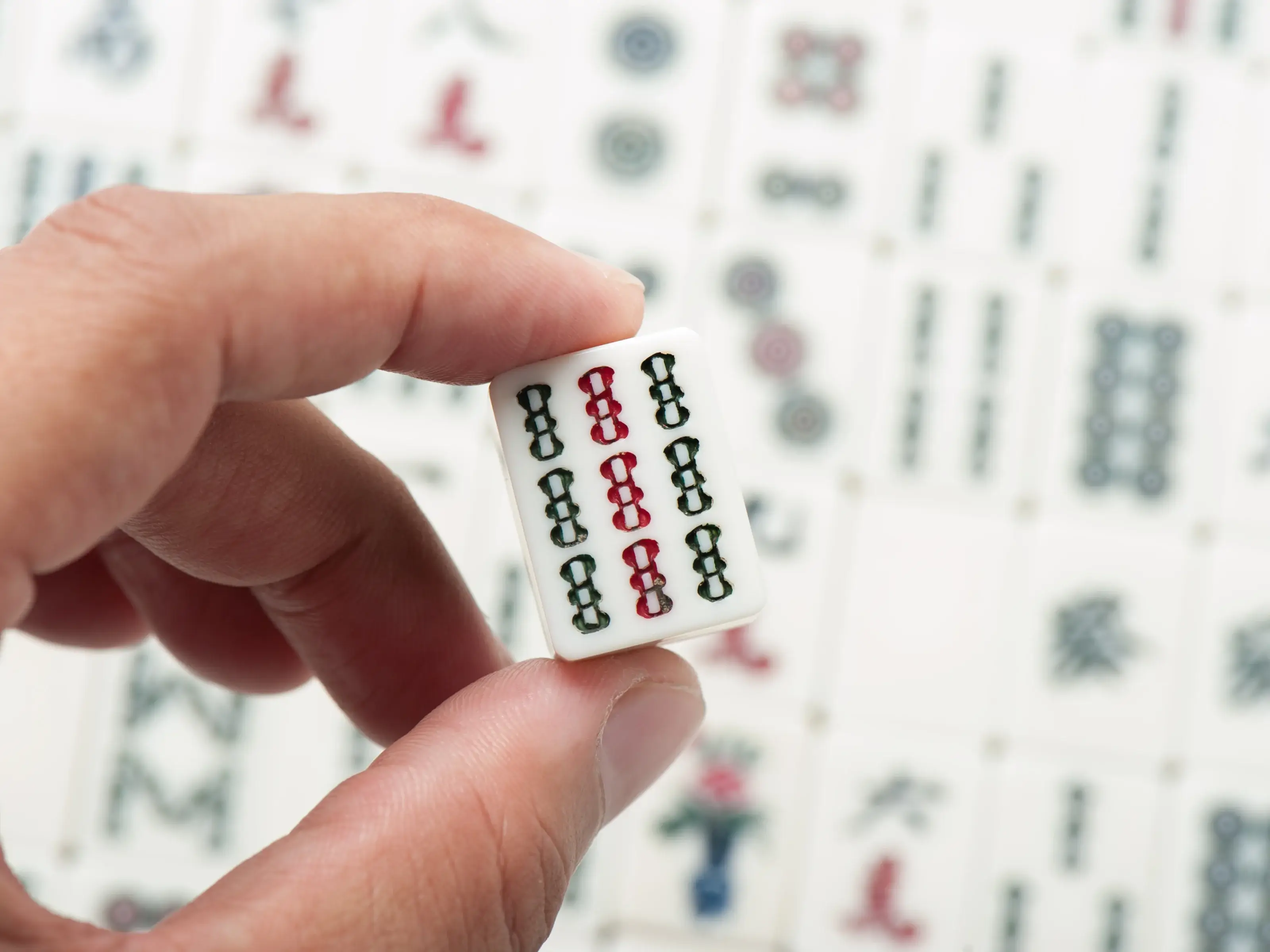
In a standard four-player mahjong game, each player starts with a baseline 25% chance of winning, but this number shifts dramatically based on skill, hand type, and game variation. While common hands appear in 11-15% of deals, rare combinations like Nine Gates or Thirteen Wonders have odds below 0.01%. The actual probability of winning depends on your ability to maximize tile efficiency, read opponents, and adapt to the specific rules in play. Understanding these mathematical realities is key to improving your mahjong win rate.
Understanding Mahjong Probability
Mahjong probability refers to the mathematical likelihood of drawing certain tiles, forming specific hands, and ultimately winning a game. It's the chance that a particular outcome (like drawing a needed tile or completing a winning hand) will happen based on how the tiles are distributed across the wall, your hand, and your opponents' hands.
Probability shapes every decision you make at the table. Knowing the odds helps you decide which tiles to keep, which to discard, and when to shift strategies mid-game. If you're waiting on a 5 of bamboo and you've already seen two of them discarded, only two remain in play. That changes your calculus entirely. Do you keep chasing that tile, or do you pivot to a different wait?
The math gets more complex when you factor in concealed hands, called sets, and draw order. Unlike a card game where a full deck becomes visible once all cards are dealt, mahjong hides significant information. Each opponent's hand is unknown, and a portion of tiles remains in the wall until drawn. This incomplete information is part of why pure probability calculations are difficult in real time, and why skilled players rely on estimates, pattern recognition, and inference rather than exact math.
Odds also change depending on the type of mahjong you're playing. Traditional four-player games, Mahjong Solitaire, and American mahjong all use different rules and tile sets, which affect the probability of forming specific hands. The history of mahjong shows how these variations evolved over time, each developing unique probability dynamics and strategic priorities.
Key factors affecting mahjong odds:
- Tile distribution: How the 144 tiles are divided among suits, honors, and bonus tiles
- Number of players: Traditional games involve four players sharing the tile pool
- Game variation: Chinese, Japanese, American, and solitaire versions use different rules
- Starting hand: Your initial 13 tiles determine your strategic options and set the ceiling on what's realistically achievable early on
- Discard information: Every tile your opponents release narrows the probability space for everyone at the table
Overall Chances of Winning a Mahjong Game
Basic Four-Player Statistics
In a standard four-player mahjong game, your theoretical baseline chance of winning is 25% (one in four). Actual win rates vary widely depending on player skill, strategy, and the specific rules in play.
The 25% baseline assumes all players have equal skill and tiles are distributed randomly with no strategic influence. In practice, results diverge significantly. A skilled player competing against three beginners might win 40-45% of games. That same player in a tournament against equally matched opponents might see their rate drop back toward the baseline, not because skill matters less, but because everyone at the table is applying it at the same level.
It's also worth distinguishing between winning a hand and winning a session. In most scoring systems, the goal isn't just to win frequently. It's to avoid large losses when you don't. A player who wins 28% of hands but consistently deals into high-value opponents' hands may end a session in worse shape than a defensive player who wins only 22% of hands but never loses big. This nuance gets overlooked when people focus narrowly on win rate.
What affects your actual win rate:
- Skill level: Experienced players who understand tile efficiency and hand reading achieve higher win rates over large sample sizes
- Defensive play: Players who focus on blocking opponents accept lower win rates to minimize point losses, which often pays off in scoring-based formats
- Aggressive strategy: Pursuing high-value hands increases variance in both directions
- Tile reading ability: Skilled players who track discards make better decisions about which tiles to pursue and which waits to abandon
- Table dynamics: Playing against passive versus aggressive opponents changes optimal strategy in ways that directly affect win probability
The Influence of Variations
Different mahjong variations change the odds in significant ways, and comparing win rates across formats isn't meaningful without accounting for the rules in play.
Traditional Chinese and Japanese mahjong maintain the 25% baseline as a starting point but diverge in how they reward hand types. Japanese Riichi mahjong introduces a declaration mechanic where you publicly commit to a specific wait, raising the stakes of that decision and changing the risk calculus for everyone at the table. Riichi also includes dora tiles (bonus value tiles revealed each round), which shift which hands are worth pursuing.
American mahjong's eight jokers provide more opportunities to complete hands and push average win probabilities upward. Jokers reduce the impact of poor draws, but they also compress the skill gap between players. Easier hands become achievable for beginners, which increases variance in win distribution across the table.
Mahjong Solitaire is a single-player matching game where probability refers to whether a layout is mathematically solvable, a different calculation entirely. The question isn't who wins, but whether the puzzle has a valid solution path. Approximately 70-85% of standard layouts are solvable depending on the design, which is why some feel nearly impossible despite careful play.
Is Mahjong Luck or Skill?
Mahjong combines luck and skill in ways that become more apparent over time. Your starting 13-tile hand is completely random, sometimes giving you a strong foundation and sometimes dealing you nearly unworkable tiles. Throughout the game, the tiles you draw add another layer of chance no player can control. Over a single session, luck plays an outsized role. Over hundreds or thousands of games, skill becomes the dominant factor.
Skill determines how you respond to the luck factor. When you receive a poor starting hand, skilled play means recognizing it early and shifting to defensive tactics rather than stubbornly chasing a hand you're unlikely to complete. If you have a strong draw, skill lies in maximizing that advantage by building powerful hands without overextending or exposing yourself to your opponents.
The evidence for skill's role is clearest in long-term results. Top players maintain win rates consistently above 25% across thousands of games. If mahjong were purely luck-based, all players would eventually converge toward equal win rates. The persistent gap between skilled and casual players demonstrates that strategic decisions compound over time, consistent with any game that blends randomness and decision-making.
One underappreciated dimension of skill is knowing when to abandon a strategy mid-hand. Many players identify a hand target in the first few turns and commit to it regardless of how conditions change. Skilled players reassess constantly. If the tiles you need start showing up in opponents' discards, or if someone declares riichi, the expected value of continuing your current path may drop below the value of switching to a safer, faster hand. Making that pivot quickly and correctly is a skill that doesn't show up in any single game but compounds significantly across a long playing career.
Skills that improve your odds:
- Tile counting: Tracking which tiles remain in the wall based on discards and called sets
- Hand reading: Deducing opponents' strategies from the pattern and timing of their discards
- Risk assessment: Knowing when to push for a win versus when the expected loss from dealing in outweighs the benefit
- Pattern recognition: Identifying efficient tile combinations without reasoning through every option from scratch
- Strategic flexibility: Adjusting your hand target mid-game when early evidence suggests your current path isn't viable
Most Common Hands and Their Probabilities
Common Sets and Sequences
Not all winning hands are equally likely in mahjong. Some patterns appear much more often because of how tiles are distributed and the rules for forming combinations. Understanding which hands occur most frequently helps you set realistic expectations and decide when to pursue a particular pattern versus when to abandon it.
Mahjong hands are built from three types of combinations: pungs (three identical tiles), chows (three consecutive tiles of the same suit), and a pair (two identical tiles). A standard winning hand contains four sets plus one pair, totaling 14 tiles.
Hands built primarily from chows are more common because consecutive tiles are easier to collect. If you hold a 3 and a 4 of bamboo, you can complete a chow by drawing either a 2 or a 5 (eight possible tiles across four copies of each). For a pung, you need one specific tile, and there are only four copies of it in the entire set. This mathematical difference explains why sequence-based hands dominate competitive play, particularly before the wall runs shallow.
The distribution of tiles reinforces this. There are 36 tiles in each numbered suit (four copies each of tiles 1-9), compared to 16 honor tiles (four winds at four copies each) and 12 dragon tiles (three types at four copies each). Suit-based chow hands draw from a larger tile pool, which naturally increases their frequency.
Most frequent winning patterns:
- Mixed chow-pung hands: Three chows plus one pung plus a pair (approximately 40% of wins)
- All chows: Four sequences plus a pair (approximately 25% of wins)
- Two pungs, two chows: Balanced combination (approximately 20% of wins)
- All pungs: Four triplets plus a pair (approximately 15% of wins)
Quick-Win Hands
Quick-win hands can be completed rapidly because they have many possible waiting tiles. A hand waiting on two different tiles has more opportunities to win than one waiting on a single tile. Hands with seven or more possible completion tiles offer the best balance between speed and realistic probability.
The concept of tenpai (being one tile away from a winning hand) is the critical threshold. Getting there quickly matters, but the quality of your wait matters just as much. A two-sided wait (waiting on a 2 or 5 to complete a 3-4 sequence) gives you twice the opportunities of a single-tile wait. In the endgame, when fewer tiles remain in the wall, this difference becomes especially significant.
Some hands are specifically designed around maximizing wait flexibility. Seven Pairs requires collecting seven different pairs from your 14 tiles. While not always high-scoring, this hand type allows for multiple possible waits and can be built incrementally from almost any starting hand.
Rare and Special Hands Explained
While most games are won with common patterns, mahjong also features legendary hands with astronomical odds. These rare combinations are highly prized, typically score maximum points, and in some circles carry a reputation that outlasts any single session.
Nine Gates Odds
Nine Gates requires holding 1-1-1-2-3-4-5-6-7-8-9-9-9 of a single suit, plus any 14th tile from that same suit as the winning draw. The probability is approximately 0.011% per deal (about 1 in 9,000 hands).
The difficulty comes from needing 13 specific tiles all from the same 36-tile suit, with intentional clustering at the terminals. You need three 1s, three 9s, and one each of the middle tiles, which means competing for duplicates of the most contested tiles in the suit. Most regular players never see this hand in years of casual gameplay. In professional play, where thousands of hands are logged, it remains rare enough to be memorable when it occurs.
Part of why Nine Gates is admired beyond its rarity is what it represents: complete mastery of a single suit, a kind of perfect order imposed on one dimension of the game. In some variations, completing it is considered a special win regardless of the scoring cap in effect.
Thirteen Wonders Odds
Thirteen Wonders (also called Thirteen Orphans) requires one each of all 13 terminal and honor tiles (the 1 and 9 of each suit, plus all four winds and three dragons) plus a duplicate of any one of those 13 as the winning tile. The odds range from approximately 0.001-0.003% per deal depending on rules, making it even rarer than Nine Gates.
The difficulty is compounded by the fact that terminals and honors are among the most contested tiles in the game. Winds score based on seat position, so everyone has reasons to hold them. Dragons award bonus points in most variations. These tiles get called, discarded strategically, and fought over from the first turn, often before you realize you're building toward this hand.
Other Legendary Hands
- All Honors: Using only wind and dragon tiles (approximately 0.02%)
- Four Concealed Pungs: Four hidden triplets without calling any tiles from opponents (approximately 0.05%)
- All Terminals: Using only 1s and 9s across all four sets and the pair (approximately 0.01%)
- Heavenly Hand: Winning on the initial deal before any discard is made (approximately 0.0001%, or roughly 1 in 1,000,000 games)
The point values assigned to these hands reflect their rarity. In some tournament formats, a Heavenly Hand ends the round immediately with a maximum score regardless of point caps, acknowledging that the occurrence itself is an event worth marking.
Tips to Improve Your Win Rate
Tile Efficiency
Tile efficiency means keeping combinations that can be completed by the maximum number of different tiles. Consider holding a 3 and 4 of bamboo versus a 1 and 2. The 3-4 combination can be completed with either a 2 or a 5 (eight tiles total in a fresh set). The 1-2 can only be completed with a 3 (four tiles). Middle tiles (roughly 3 through 7) create more flexible combinations than terminals, which is why experienced players prioritize them early and let go of terminal-heavy starts unless they're building toward a terminal or honors hand specifically.
When you maintain multiple incomplete sequences rather than committing to a single wait, you increase your outs (the number of different tiles that advance your hand in a meaningful way). A hand with five possible advancing tiles has substantially better expected completion speed than one with two. This compounds over several turns and matters most in the early and middle phases, when the wall is still deep.
Efficiency also means being willing to break up a partially formed set if a better structure becomes available. Holding onto a pung of 1s when three better sequences are forming around you may feel wrong (you already collected three of the same tile), but sunk cost thinking at the mahjong table is expensive.
Defensive Discards
Defensive discarding means releasing tiles that minimize the risk of dealing directly into an opponent's winning hand. Early in the game, tiles that have already appeared in discards are statistically safer. If an opponent released a 6 of bamboo on turn three, they almost certainly don't need it. Late in the game, honor tiles often become relatively safe for the same reason: players who needed them have usually collected them or moved on.
Defensive play involves real trade-offs. Players who focus heavily on safety typically see their win rate drop by a few percentage points, but they reduce the frequency and magnitude of dealing into high-scoring hands. In scoring systems where dealing in a win costs more points than you'd gain from winning yourself, the math often favors caution in the late game.
A useful framework: assess your hand on every draw. If you're two or three tiles from tenpai and the wall is running low, pushing may have positive expected value. If you're four or more tiles away and an opponent has declared riichi or shown signs of a near-complete hand, shifting to pure defense is often correct.
Reading Opponents
Reading opponents means tracking visible information (primarily discards) to calculate what tiles remain and what hands your opponents are likely building. If three copies of the 7 of bamboo have appeared in discards or called sets, the fourth is either in a concealed hand or unavailable. Knowing that, you can make better decisions about pursuing sequences that depend on it.
Even partial tracking provides value. You don't need to memorize all 144 tiles in real time. Focusing on the 15-25 tiles most relevant to your current hand and watching for patterns in the rhythm and type of opponents' discards yields actionable information without becoming cognitively overwhelming. Experienced players often describe this as a feel for the table, which is really just internalized probability estimation built through repetition.
Pay attention to what opponents stop discarding. Early-game releases often include honor tiles and isolated terminals. If a player suddenly stops releasing tiles and draws without discarding strategically, they may be approaching tenpai. That's a signal to shift defensively regardless of where you are in your own hand.
Putting It All Together for Better Odds
Improving at mahjong is fundamentally about narrowing the gap between what happens and what you expect, and then making better decisions within that gap.
Most of the improvement available to intermediate players isn't in learning obscure hand patterns. It's in tile efficiency fundamentals, faster recognition of when a hand strategy should be abandoned, and more consistent defensive play in the late game. These are unglamorous skills, but they account for the bulk of the statistical gap between average and strong players.
The best way to develop probability intuition is through consistent practice across a large number of hands. Pattern recognition builds faster when you're deliberate about reviewing decisions after the fact. After a session, consider the hands where you dealt into a win or fell just short: was there a moment where a different discard choice would have changed the outcome? That kind of post-game analysis accelerates the development of instincts that eventually let you estimate odds in real time without conscious calculation.
Playing Mahjong Solitaire can support pattern recognition and tile memory, even though the probability model is completely different from competitive play. Recognizing tile types quickly and building visual familiarity with how sets connect reduces cognitive load during live games, freeing up mental capacity for the decisions that actually move your win rate. You can practice at TheMahjong.com, which offers over 200 layouts designed to build exactly that kind of tile intuition.
FAQs About Mahjong Odds
How do mahjong odds differ between solitaire and traditional multiplayer versions?
Mahjong Solitaire is a single-player matching game where odds refer to whether a layout is solvable (typically 70-85% depending on design), while traditional multiplayer mahjong is competitive with a 25% baseline win probability per player. They use similar tiles but represent completely different probability models. Solitaire tests pattern recognition and matching strategy; traditional mahjong involves hand construction, opponent reading, and competitive timing under uncertainty. The history of mahjong explains how these variations developed separately and why their strategic demands diverged so significantly.
What is the probability of winning mahjong on the first draw?
Winning on the initial deal (called a Heavenly Hand or Blessing of Heaven) has a probability of approximately 0.0001%, or roughly 1 in 1,000,000 games. This requires your starting 13 tiles plus your very first draw to form a complete winning hand with no discards and no opponent action. The rarity comes from needing a perfect combination immediately, with no ability to adjust. Most players never witness this in decades of regular play.
Can you calculate mahjong odds during gameplay?
Experienced players perform simplified probability tracking by counting visible tiles and estimating remaining options, but exact real-time calculation is impractical. The cognitive load of perfect calculation would interfere with gameplay. Instead, players develop intuition through experience, recognizing common patterns and estimating odds based on the visible information at the table. This approximation is sufficient for making meaningfully better decisions than guessing, and it improves continuously with practice.
Do jokers in American mahjong significantly change winning odds?
American mahjong's eight jokers increase average win probability compared to traditional rules because they provide greater flexibility in completing hands. Jokers can substitute for any tile, making hands that would be difficult under standard rules achievable. This reduces the impact of poor tile draws and allows players to pursue a wider range of patterns. Joker management (deciding when to deploy them versus when to save them for higher-value combinations) becomes a key strategic skill, and the calculus differs enough from traditional mahjong that strategy guides for one format don't translate cleanly to the other.
Other Mahjong News
Try out the Mahjong gameplay practices on TheMahjong.com
Playing Mahjong at TheMahjong.com offers not just an interesting and exciting pastime, but also an excellent way to improve cognitive skills. Here, you can refine your logical thinking, planning, and visual perception. We invite you to discover this unique world of Mahjong Solitaire and dive into an exciting adventure at TheMahjong.com!