
Mahjong Defense Fundamentals: From Beginner to Expert
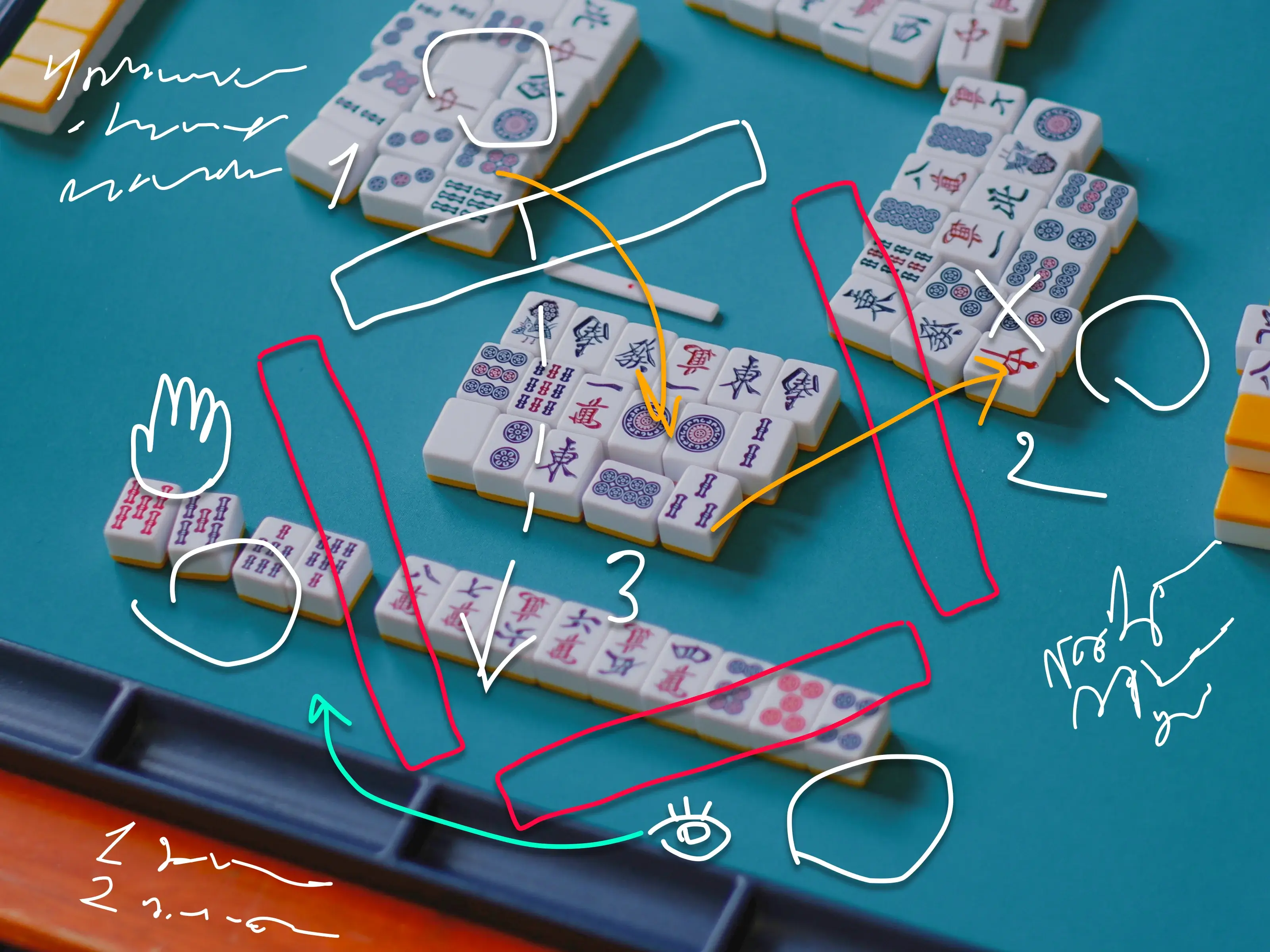
The art of Mahjong defense separates consistent winners from occasional players. While offensive play gets most attention, defensive techniques prevent you from dealing into opponents' hands and protect your score over time. Drawing from thousands of gameplay hours, TheMahjong.com's team of experienced players has compiled this practical guide to defensive strategies that work across skill levels.
What Mahjong Defense Means
Mahjong defense is the systematic practice of avoiding discards that could complete an opponent's winning hand. Unlike purely offensive play, defensive Mahjong requires you to track discards, read opponents' strategies, and make probability-based decisions throughout each round.
Defense operates on a simple principle: every tile you discard carries risk. A strong defender builds a mental map of which tiles are dangerous and which are safe. This skill becomes particularly valuable in the middle and late stages of each hand when multiple players approach completion.
Expert defenders understand the defensive value of each tile changes throughout the game. The 5-bamboo might be relatively safe early in a hand but become extremely dangerous later as discards accumulate and opponents' strategies become clearer.
Why Defensive Play Matters More Than You Think
Tournament-level Mahjong players consistently emphasize defense because the mathematics of the game favor caution. A single deal-in to a high-scoring hand can negate multiple winning hands of your own, particularly in Japanese-style Mahjong where a single yakuman hand can cost 32,000 points or more.
Defensive play becomes especially important in these specific situations:
- When you're in the lead position (especially in tournament settings)
- After an opponent declares riichi, signaling they're waiting to win
- When multiple opponents have made calls, indicating advancing hands
- During the late stages of each round when deal-in risks increase significantly
Concrete benefits of strong defensive play include:
- Protection against catastrophic point losses
- Consistent tournament performance despite luck variations
- Strategic pressure on opponents to take risks
- Higher final placement in competitive settings
Key Techniques To Identify Safe Tiles
1. Suji Tips
Suji defense represents one of the most mathematically sound defensive techniques in Mahjong. This concept identifies tiles that are numerically related in ways that make them statistically safer discards.
In practice, suji works like this: If a player discards a 4, the 1 and 7 of the same suit become relatively safer to discard. This is because standard waiting patterns for sequences (like 2-3 waiting for 1 or 4, or 5-6 waiting for 4 or 7) would have made that 4 valuable to keep.
Expert players maintain constant awareness of all suji relationships across the table. For dedicated practice with suji identification, our Kyodai 14 free Mahjong game offers pattern recognition exercises that strengthen this specific skill.
2. Genbutsu Guidance
Genbutsu represents the cornerstone of safe play in Mahjong. These are tiles that an opponent has already discarded, making them 100% safe to discard against that specific opponent (with rare exceptions in some variants).
This seemingly simple concept requires disciplined execution:
- Maintain a mental record of each player's discards
- Prioritize genbutsu discards when an opponent declares riichi
- Note the order of discards (early discards are more reliably safe)
When facing multiple threats, prioritize genbutsu against the most dangerous opponent—typically the one closest to winning or with the highest scoring potential.
3. Kabe Insights
Kabe (wall) defense relies on tile depletion to identify safe discards. By tracking visible tiles, you can identify situations where certain combinations become impossible.
For example:
- If three 5-pins are visible (in discards or melds), the fourth 5-pin becomes safer because only one player could potentially need it, and only for specific hand patterns
- If all four of any tile are visible, any tile that would complete a sequence with that tile becomes safer
Experienced players regularly scan the table to identify these kabe situations, creating defensive opportunities that less observant players miss.
When To Switch From Offense To Defense
1. Early Signs of Danger
Recognizing defensive inflection points can save hundreds of points per game. Watch for these specific warning signs:
- A player discards a dora indicator or valuable honor tile (suggesting they're committed to a hand type)
- A player makes a sequence call late in the game (indicating they're close to completion)
- A player begins discarding terminals after previously keeping them (showing a strategy shift)
- Any riichi declaration (the clearest signal to shift to defense)
The timing of your defensive shift matters—too early sacrifices winning opportunities, too late risks dealing in.
2. Recognizing Opponent Discards
Reading discard patterns reveals opponents' strategies when you know what to look for:
- Sequential discards within a suit often indicate the player is not collecting that suit
- A player who discards multiple honors early is likely building a suit-based hand
- Discards that break suji patterns suggest a player is committed to a specific wait type
The Kyodai 24 free Mahjong version provides excellent practice for recognizing these patterns in a structured environment before applying them in competitive play.
3. Minimizing Point Loss
Sometimes the mathematically correct play is to completely abandon your hand. This technique, called folding, involves discarding only the absolutely safest tiles regardless of your hand's potential.
Professional players fold approximately 20-30% of hands, recognizing that defense isn't just about avoiding last place—it's often about securing first. When multiple riichi declarations occur or opponents are clearly pursuing high-value hands, complete defensive play usually offers the best expected value.
Building A Defensive Mindset
Developing defensive awareness requires both technical knowledge and psychological discipline. Many players struggle not with understanding defense but with implementing it consistently when their own hand seems promising.
Effective defenders approach each discard as a risk assessment:
- Identify the specific danger level of each tile in your hand
- Compare the value of your current hand against the risk of dealing in
- Consider the game context (your position, the round number, other players' strategies)
- Make the mathematically sound choice, even when emotionally difficult
This calculated approach to Mahjong produces more stable results over time than purely intuitive play.
With regular practice on TheMahjong.com's platform, these defensive techniques become second nature. Begin by focusing on one concept at a time—perhaps tracking genbutsu for a few games before adding suji awareness. As these skills combine, you'll develop the defensive foundation that characterizes advanced Mahjong play.
FAQs About Mahjong Defense
How does defense differ between Mahjong variants?
Defense principles remain consistent across variants, but implementation varies. Japanese Riichi Mahjong emphasizes defensive play most heavily due to riichi declarations and higher scoring potential. Chinese variants typically feature more aggressive play with fewer defensive signals. Hong Kong Mahjong falls between these extremes. Regardless of variant, core concepts like genbutsu and suji apply universally, though their relative importance shifts based on scoring systems and game rules.
Is defensive play more important for beginners or advanced players?
Both benefit differently from defense. Beginners should prioritize defensive fundamentals to avoid catastrophic losses while learning offensive strategies. Advanced players use defense strategically to protect leads and maximize tournament placement. The difference lies in execution—beginners apply defense broadly, while experts calibrate defensive intensity based on game context, position, and opponent tendencies. Strong defense accelerates improvement at all skill levels by reducing variance.
Can good defense compensate for poor hand-building skills?
Defense alone cannot overcome weak offensive play, but it significantly improves results. Players with mediocre hand-building but excellent defense consistently outperform aggressive players with poor defensive awareness. Defense prevents the large point losses that negate multiple wins. However, balanced improvement in both areas produces optimal results. Think of defense as your foundation—it keeps you competitive while you develop offensive skills through practice and experience.
What is the 1/4/7 rule in Mahjong defense?
The 1/4/7 rule (also 2/5/8 and 3/6/9) identifies suji relationships within suits. If an opponent discards a 4, the 1 and 7 become statistically safer because common waiting patterns would have retained that 4. This applies to all number tiles three positions apart. While not absolute safety, these suji tiles carry significantly lower risk than non-suji alternatives. Advanced players track multiple suji relationships simultaneously across all three suits.
How do I balance offense and defense effectively?
Effective balance requires continuous risk assessment. Early in hands, prioritize offense while maintaining awareness of developing threats. Shift toward defense when opponents signal strong hands through riichi, multiple calls, or suspicious discard patterns. Consider your position—leaders should defend more, while trailing players may need calculated risks. The key is flexibility: strong players fluidly adjust their offense-defense ratio based on changing game conditions rather than committing rigidly to either approach.
Other Mahjong News

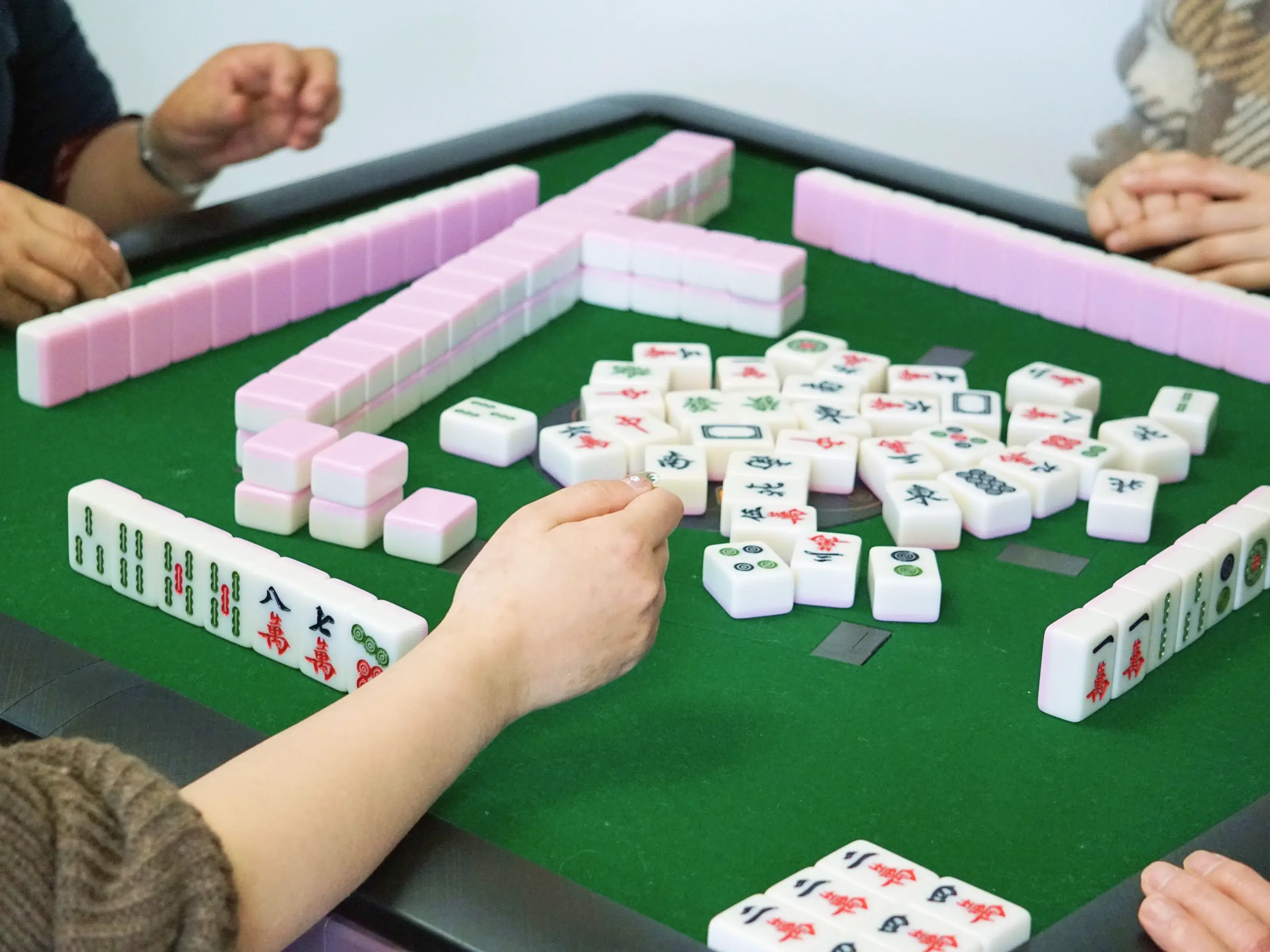
Try out the Mahjong gameplay practices on TheMahjong.com
Playing Mahjong at TheMahjong.com offers not just an interesting and exciting pastime, but also an excellent way to improve cognitive skills. Here, you can refine your logical thinking, planning, and visual perception. We invite you to discover this unique world of Mahjong Solitaire and dive into an exciting adventure at TheMahjong.com!