
How to Teach Kids Mahjong
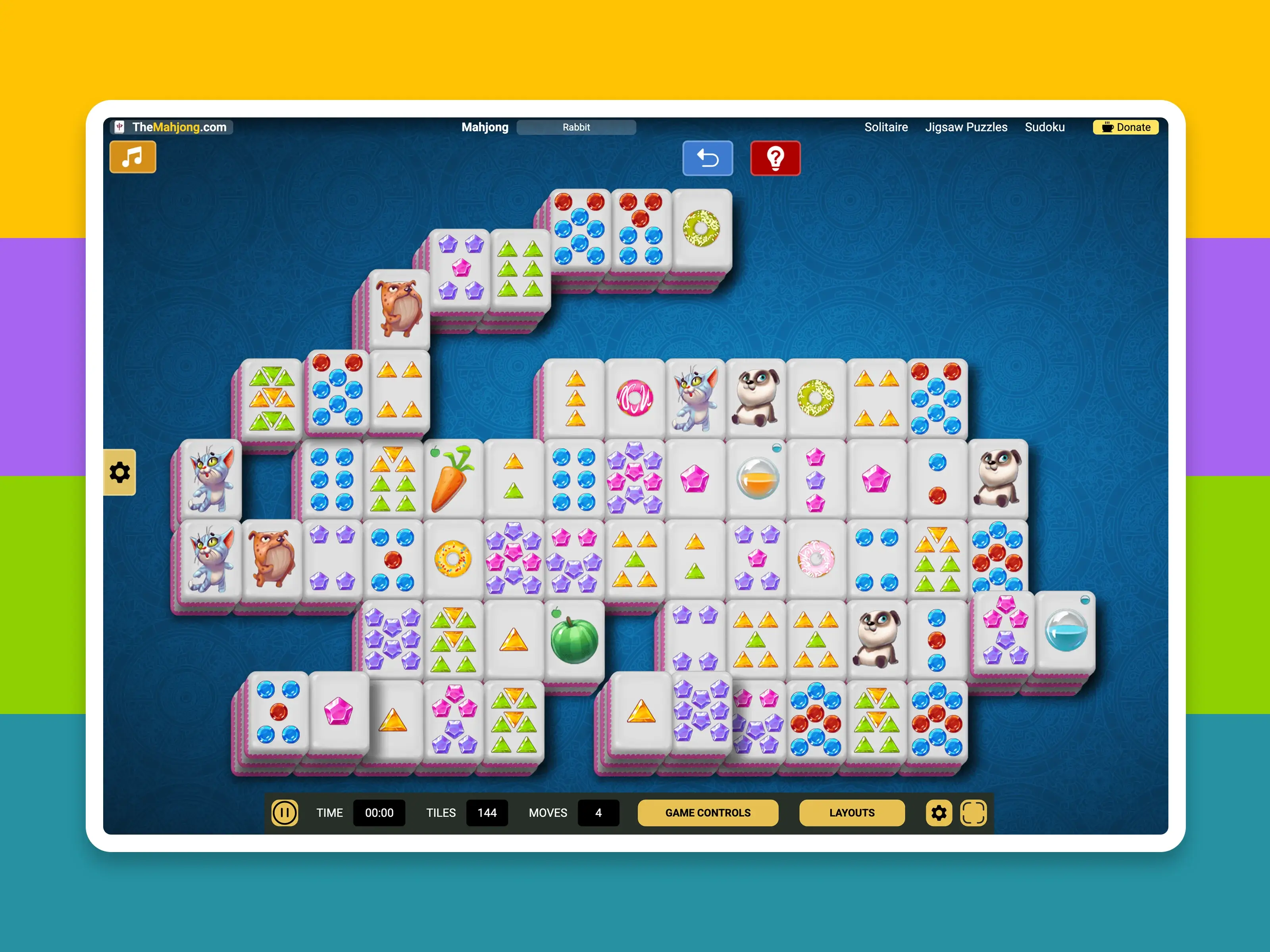
Mahjong is a tile-matching game that originated in China and comes in different versions. This guide focuses on teaching Mahjong Solitaire, the single-player matching game that's most accessible for kids and perfectly suited for learning the basics online at TheMahjong.com.
What Kids Gain From Learning Mahjong
Mahjong offers measurable benefits beyond entertainment. Here are research-backed reasons to teach children Mahjong:
Pattern recognition: Matching tiles by suit and symbol trains visual discrimination skills. Kids learn to spot the difference between a two Bamboo and a three Bamboo, which helps with reading and math. This skill transfers directly to recognizing letter differences like "b" and "d."
Memory improvement: Remembering where specific tiles are located strengthens short-term memory. Kids must recall which tiles are still available as they plan their next moves. This works similarly to memory card games but with added spatial reasoning.
Strategic thinking: Planning ahead to clear tiles in the right sequence teaches kids to think several steps forward, similar to solving puzzles or math problems. Some children naturally grasp this concept quickly, while others need more time and guidance.
Focus and concentration: Completing a Mahjong layout requires sustained attention, helping kids practice focusing on a single task for longer periods. Expect initial play sessions to be brief as attention spans develop.
Hand-eye coordination: Selecting and matching tiles, whether on a screen or with physical pieces, develops fine motor skills and hand-eye coordination.
Research shows that playing Mahjong has been linked to gains in children’s processing speed and problem‑solving skills (Higashijima et al., 2022). These benefits make it a valuable activity for both fun and learning, though results vary by individual.
Simple Overview Of Mahjong Rules
When teaching kids Mahjong, start with Mahjong Solitaire because it's simpler than traditional four-player Mahjong.
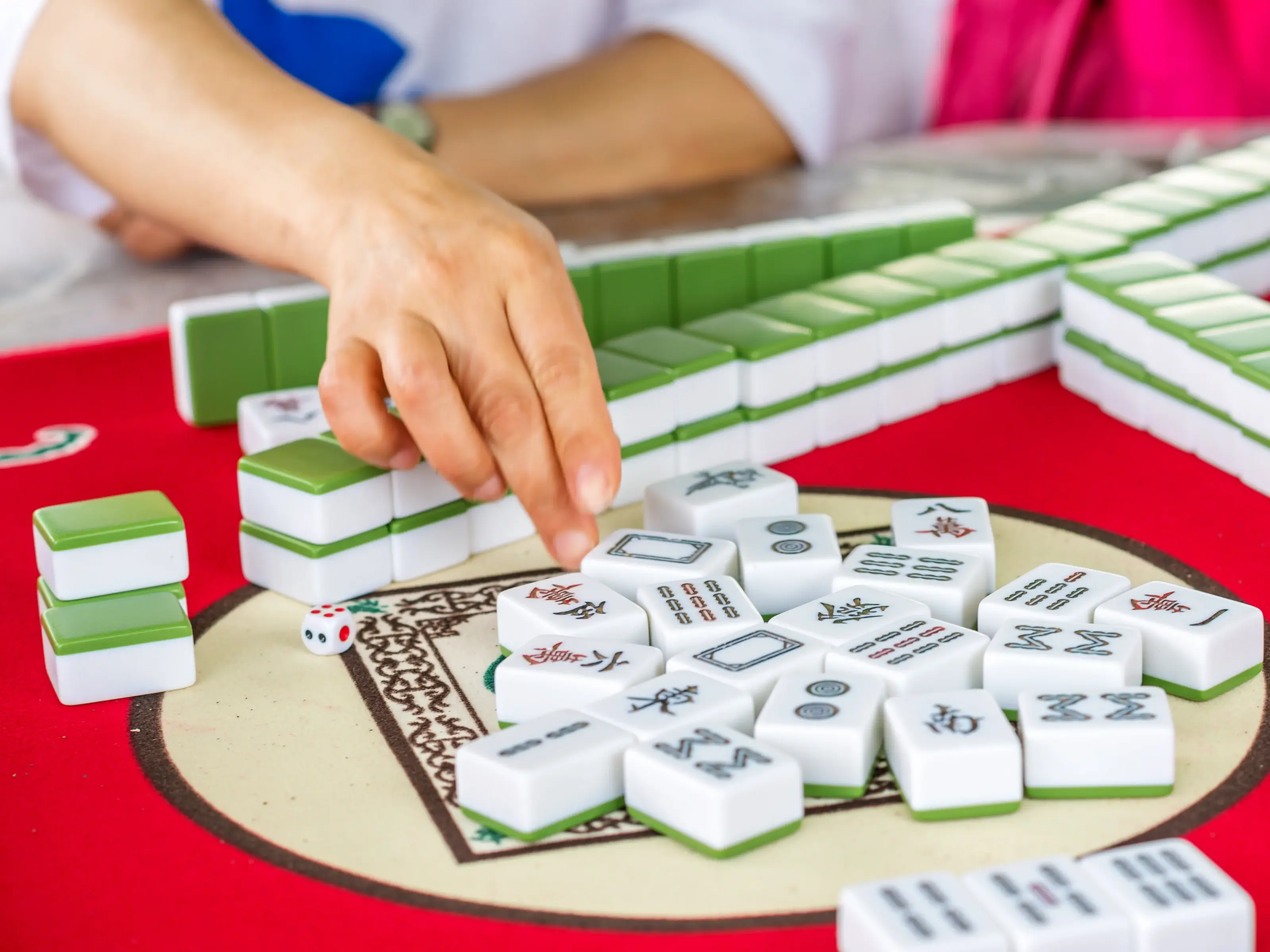
- Tiles: Mahjong tiles are small rectangular pieces with different symbols and numbers.
- Suits: The three main suits are Bamboo, Characters, and Dots.
- Special tiles: Winds, Dragons, Flowers, and Seasons add variety.
- Pairs: You match tiles in identical pairs (same suit, same symbol, same number).
- Free tiles: Only tiles with at least one side (left or right) completely open can be played.
- Layout: Tiles are arranged in layered patterns, such as the classic "Turtle" shape.
- Objective: Remove all tiles from the board by matching identical pairs.
Traditional four-player Mahjong has different rules, but Mahjong Solitaire is ideal for solo practice and works well for beginners.
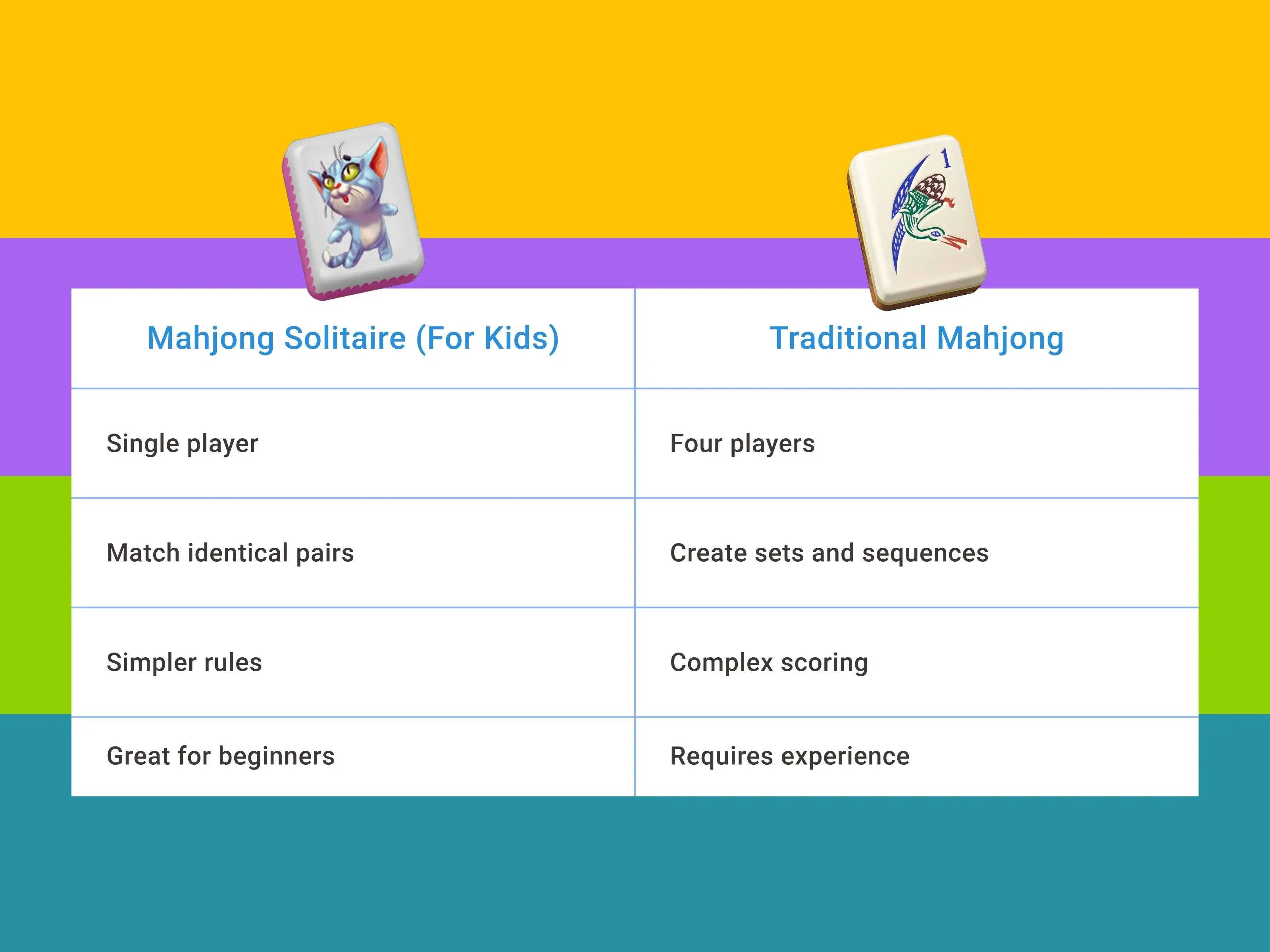
Mahjong Solitaire (For Kids)
- Single player
- Match identical pairs
- Simpler rules
- Great for beginners
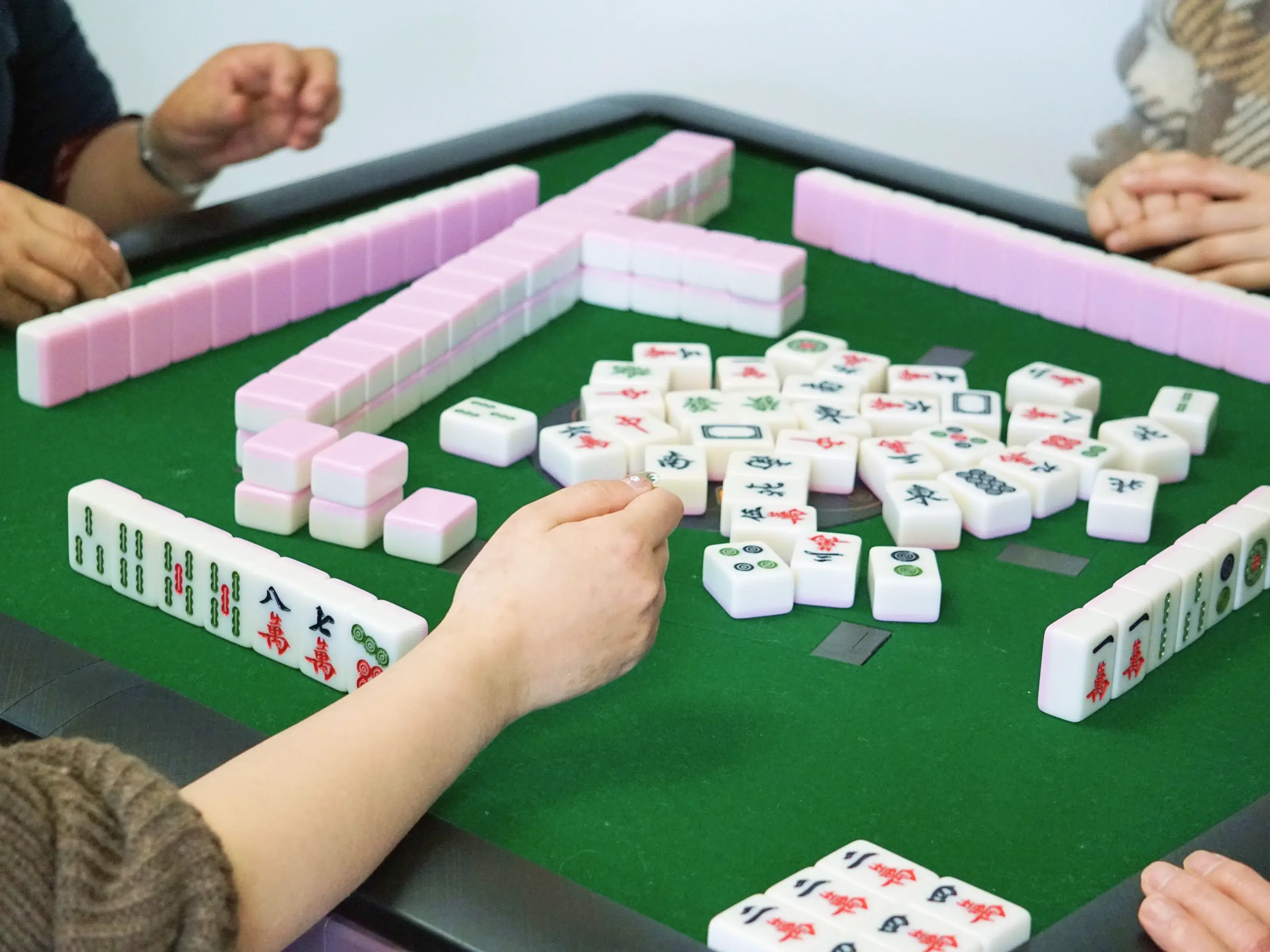
Traditional Mahjong
- Four players
- Create sets and sequences
- Complex scoring
- Requires experience
Choosing The Right Equipment For Kids
Parents have several options for teaching kids Mahjong, including physical tile sets, online platforms, and mobile apps. Each has advantages depending on your child's learning style and your family's situation.
Physical tile sets: Simplified 72-tile sets are perfect for young beginners, as they contain fewer tile types and are easier to manage. Standard 144-tile sets work well for older kids (ages 8+). Choose tiles with larger sizes for small hands and clear, colorful symbols for easy recognition. Physical tiles can be expensive and require storage space, but they offer tactile learning benefits.
Online platforms: Websites like TheMahjong.com offer free, accessible practice with no setup time. Digital versions provide instant feedback and unlimited mahjong layouts. For kids ready to explore different layout styles, try Kyodai's traditional free Mahjong which offers classic arrangements. Be mindful of screen time recommendations for your child's age group.
Mobile apps: These allow kids to play and practice on the go, making it easy to fit in short sessions anywhere. However, smaller screens may be harder for young children to use accurately.
For younger kids (ages 5-7), larger tiles or tablet interfaces work best. Older kids (ages 8-12) can handle standard equipment and more complex layouts. Many families combine both physical and digital tools to keep practice engaging and limit screen exposure.
Step-by-Step Teaching Tips
Teaching Mahjong to kids works best with a progressive approach that builds skills gradually. These steps represent an ideal progression, but your child may move faster or slower through each stage. Keep sessions short (10-15 minutes for younger kids, 20-30 for older), use encouraging language, and celebrate effort as much as success.
Demonstrate Tile Matching
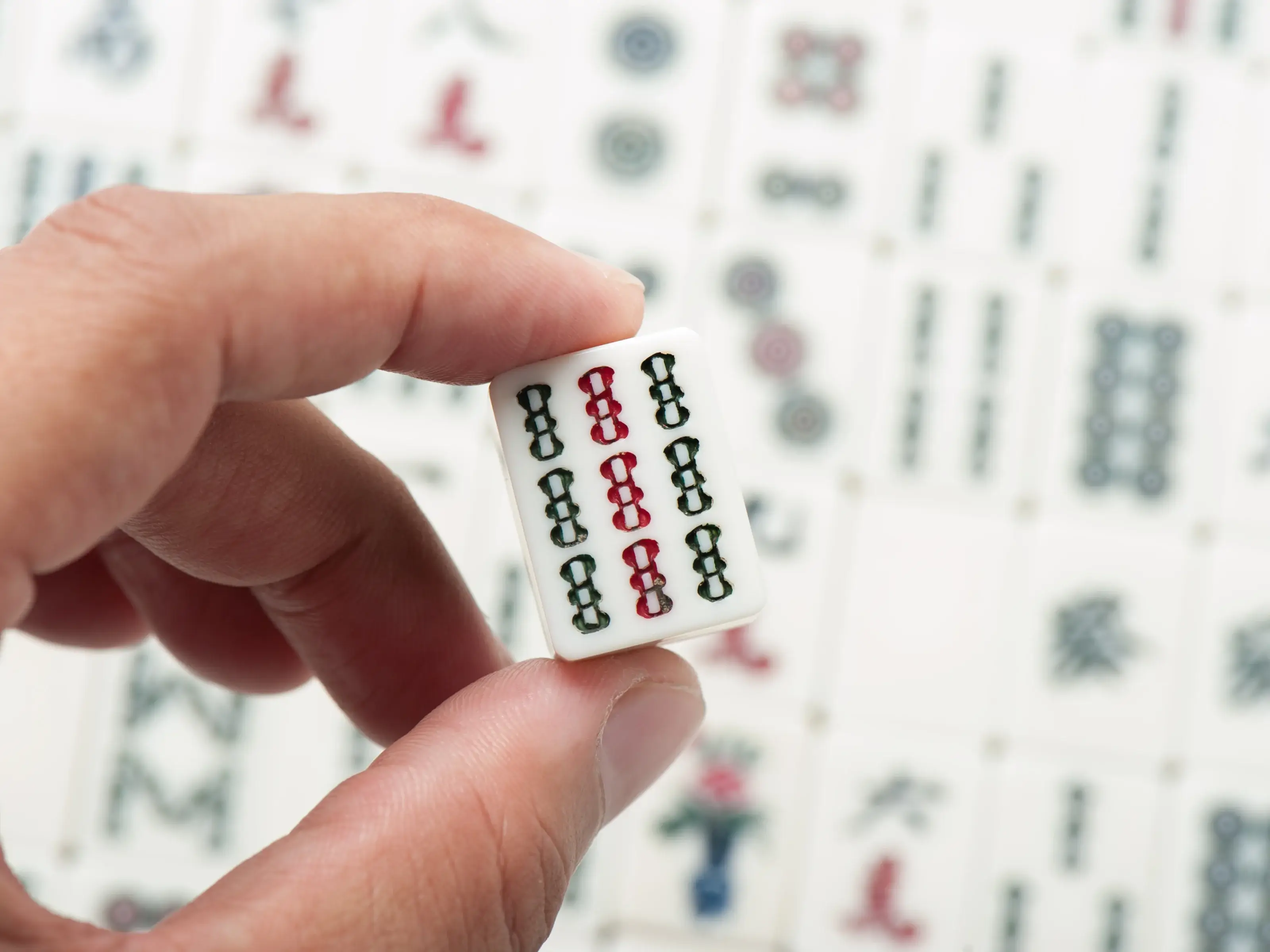
Recognizing identical tiles is the foundational skill in kids' Mahjong Solitaire. Lay out 10-15 pairs face-up on a table. Pick up two identical tiles and explain what makes them a match (same suit, same symbol, same number). Point out differences between similar tiles, such as two Bamboo versus three Bamboo. Let kids practice finding matches from the spread-out tiles before moving to a full game layout. Some children may need several sessions at this stage before feeling confident.
Guide Them Through A Practice Round
Choose a simple layout on TheMahjong.com, such as the classic pyramid. Start the game together, pointing out which tiles are "free" (open on the left or right side). Let your child identify matching pairs among free tiles and make the match themselves. Explain that when tiles are removed, new tiles become free. Complete 2-3 simple layouts together before moving to independent play. Don't worry if your child makes mistakes—learning what doesn't work is part of the process.
Encourage Pair And Set Recognition
Help kids scan the entire board before making moves and teach them to ask, "If I remove these tiles, what new tiles become available?" Introduce the concept of "blocking," where removing certain pairs can prevent access to other important tiles. Think aloud during demonstrations to model strategic thinking. Start with layouts that have fewer layers to make scanning easier. This strategic skill takes weeks or months to develop, so be patient with the learning curve.
Celebrate Small Wins
Mahjong can be challenging, so positive reinforcement matters. Celebrate specific achievements, such as completing their first layout, remembering the free tile rule without prompting, or identifying a strategic move independently. Avoid comparisons to siblings or other kids. Set personal goals like, "Let's try to beat your time from yesterday." Even incomplete games offer learning value—focus on effort and problem-solving, not just winning. If your child gets frustrated, take a break and return later.
Age Appropriate Adaptations
Kids develop at different rates, so use these guidelines as starting points and adjust based on your child's needs and interest level. Some kids below these age ranges may be ready, while others may need more time.
Ages 5-7: Start with just 20-30 tiles in simple layouts. Use only one or two suits (e.g., Bamboo and Dots) to keep things manageable. Sessions should be 10-15 minutes maximum, with lots of parental guidance and verbal prompting. Many children this age will struggle with the strategic aspects, which is completely normal.
Ages 8-10: Kids this age can handle full 144-tile layouts with all suits. Introduce strategy concepts like planning ahead and avoiding blocks. They can play independently but still benefit from occasional guidance. Sessions can be 20-30 minutes, and many enjoy tracking their progress. You might also explore Haga's free Mahjong layouts for variety and different challenges.
Ages 11+: Pre-teens can handle complex layouts and strategic thinking. They might enjoy researching Mahjong history or exploring different cultural variations. Encourage independent practice with occasional parent check-ins. Some may lose interest if the game feels too easy, so introduce timed challenges or harder layouts.
Moving slower is better than pushing too hard. If your child resists learning, it may not be the right time—try again in a few months.
Digital And Online Mahjong Options
Digital platforms offer several advantages for teaching kids Mahjong: no setup time, automatic rule enforcement, unlimited layouts, and instant feedback. When choosing online mahjong for kids, look for these features:
- Free access without subscriptions or constant ads
- Multiple difficulty levels with beginner-friendly layouts
- Clean, uncluttered interface to help kids focus
- Mobile compatibility for playing anywhere
- No registration required
TheMahjong.com meets these criteria. It offers over 200 layouts from simple to complex, a clean, distraction-free interface, and is completely free with no registration needed. It works on both desktop and mobile devices and has been recognized as "Best Mahjong of the Year" for accessibility.
When using digital platforms, consider your family's screen time limits. The American Academy of Pediatrics recommends no more than one hour of screen time daily for children ages 2-5, and consistent limits for older children. Mahjong can be part of that time, but balance it with other activities.
Encouraging Practice Through Fun Variations
Even kids who love Mahjong might need variety to stay motivated. These variations keep practice fresh while reinforcing core skills. Not every child will enjoy these—adjust based on what works for your family.
Simple Tile Matching Variation
Lay 20 tiles face-down in a grid, like a memory or concentration game. Kids flip two tiles per turn, trying to find matches. This removes the spatial strategy element and focuses purely on tile recognition and memory. It's a great stepping stone before full Mahjong Solitaire and works well as a quick 5-10 minute activity.
Scavenger Hunt Variation
Hide Mahjong tiles around a room (or use printed images). Call out a specific tile ("Find the three Bamboo!") and let kids race to locate it. This reinforces tile recognition without the pressure of gameplay and works especially well for kinesthetic learners.
Feel free to invent your own variations based on your child's interests. The goal is making learning enjoyable, not following rigid rules.
Join The Fun With The Mahjong
Teaching kids Mahjong builds valuable cognitive skills while providing hours of entertainment. The basics are simple—match identical tiles, follow the free tile rule, and practice regularly—but mastery takes time. Be patient with the learning process and adjust your approach based on your child's responses.
TheMahjong.com offers a low-barrier starting point for families: it's completely free, offers beginner-friendly layouts, and has a clean interface without distracting ads. Whether you choose physical tiles, online platforms, or both, the key is consistent practice and making it fun.
Frequently Asked Questions About Mahjong For Kids
Is Mahjong Suitable For Kids?
Yes, Mahjong is suitable for kids when you start with the right version. Mahjong Solitaire works well for children because it has simple rules—match identical pairs and remove all tiles. The game builds pattern recognition, memory, and strategic thinking without requiring reading skills. Physical coordination is the main requirement, so kids who can manipulate small objects or tap a screen accurately can play. Some children as young as 5 can start with simplified versions, while others may be ready at 7 or 8. Watch for your child's interest level and frustration tolerance as better indicators than age alone.
What Age Should Kids Start Learning Mahjong?
Most kids can start learning Mahjong Solitaire between ages 5-8, depending on individual development. Children ages 5-7 need simplified versions with fewer tiles, larger pieces, and lots of parental guidance. Kids ages 8-10 can handle standard layouts and begin developing strategic thinking. Ages 11 and up can explore complex patterns and may even be ready for traditional four-player Mahjong. The key is matching the game's complexity to your child's current abilities. If your child shows frustration or disinterest, wait a few months and try again. There's no rush—some kids develop the necessary skills earlier, others later.
What Is The Easiest Version Of Mahjong To Learn?
Mahjong Solitaire is the easiest version to learn, especially for kids. Unlike traditional four-player Mahjong, which involves complex scoring, tile drawing, and multiple rule variations, Mahjong Solitaire has one simple objective: match identical pairs until all tiles are removed. The rules are straightforward—tiles must be free on at least one side to be played. There's no competition, no time pressure, and no complicated scoring system. This makes it perfect for beginners of any age. Once kids master Mahjong Solitaire, they can explore traditional Mahjong if they're interested, but many enjoy the solitaire version indefinitely.
Is Mahjong Harder Than Chess?
Mahjong Solitaire is generally easier than chess for kids to learn. Chess requires understanding how six different pieces move, planning multiple moves ahead, and anticipating an opponent's strategy. Mahjong Solitaire has one simple rule: match identical tiles that are free. The strategic depth is less complex—kids need to recognize which moves open up more options, but they don't need to calculate opponent responses. Traditional four-player Mahjong is more comparable to chess in complexity, with intricate scoring and strategic depth. For teaching kids, Mahjong Solitaire offers a gentler learning curve and faster gameplay, making it more accessible for younger children or beginners.
How Long Does It Take Kids To Learn Mahjong?
Most kids grasp the basic rules of Mahjong Solitaire within 1-3 sessions of 15-20 minutes each. They'll understand tile matching and the free tile rule quickly. However, developing strategic thinking—planning ahead, avoiding blocks, scanning the full board—takes weeks or months of regular practice. Younger kids (ages 5-7) may need several weeks just to master tile recognition and the free tile rule. Older kids (ages 8+) often progress faster, developing strategy within a few weeks. The timeline varies significantly based on age, prior puzzle experience, and how often they practice. Consistent short sessions work better than occasional long ones.
Can Mahjong Help With School Skills?
Yes, Mahjong builds several skills that transfer to school performance. Pattern recognition helps with reading (distinguishing similar letters) and math (recognizing number patterns). Memory practice strengthens recall abilities useful for learning facts and vocabulary. Strategic thinking develops problem-solving skills applicable to math word problems and science experiments. Focus and concentration improve attention span during classroom activities. Research shows that games like Mahjong improve executive functions, which help kids plan, organize, and complete schoolwork. While Mahjong shouldn't replace homework or reading, it offers cognitive benefits beyond simple entertainment. Think of it as productive screen time or puzzle practice that happens to be fun.
Other Mahjong News
Try out the Mahjong gameplay practices on TheMahjong.com
Playing Mahjong at TheMahjong.com offers not just an interesting and exciting pastime, but also an excellent way to improve cognitive skills. Here, you can refine your logical thinking, planning, and visual perception. We invite you to discover this unique world of Mahjong Solitaire and dive into an exciting adventure at TheMahjong.com!