
Mahjong Styles Compared: Chinese, Japanese, American and More
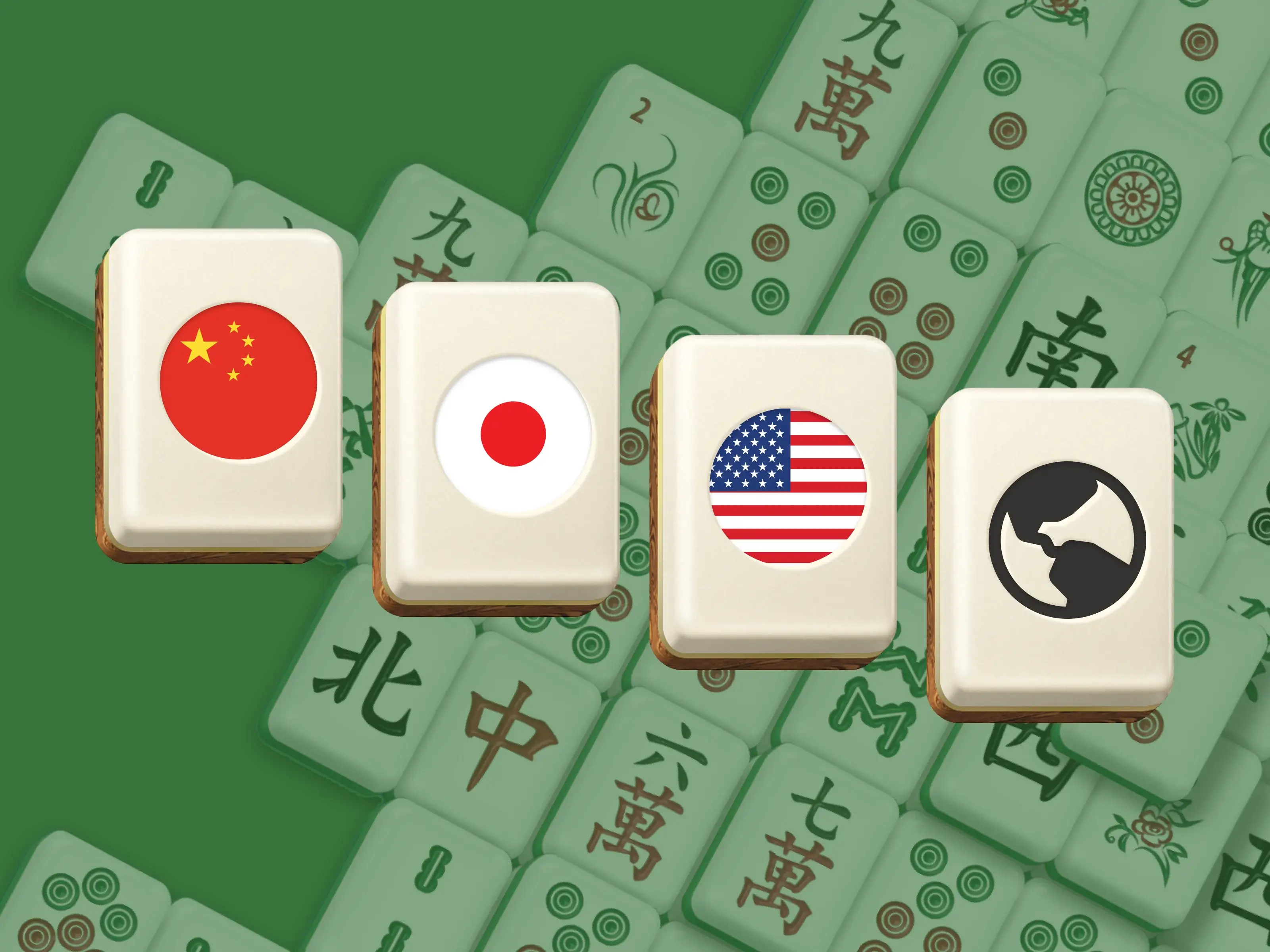
Mahjong has captivated players worldwide with its blend of strategy, skill, and social interaction. As this ancient game traveled across continents, it evolved into distinct variations that reflect local cultures and preferences. At TheMahjong.com, we've studied these variants extensively to provide the most authentic digital mahjong experience possible.
Overview of Mahjong Types
Mahjong exists in several major variants across different countries and regions, each with its own unique rules, tile sets, and scoring systems. The four primary variants—Chinese, American, Japanese, and Taiwanese—each offer distinct gameplay experiences while maintaining the core essence of matching and collecting tiles.
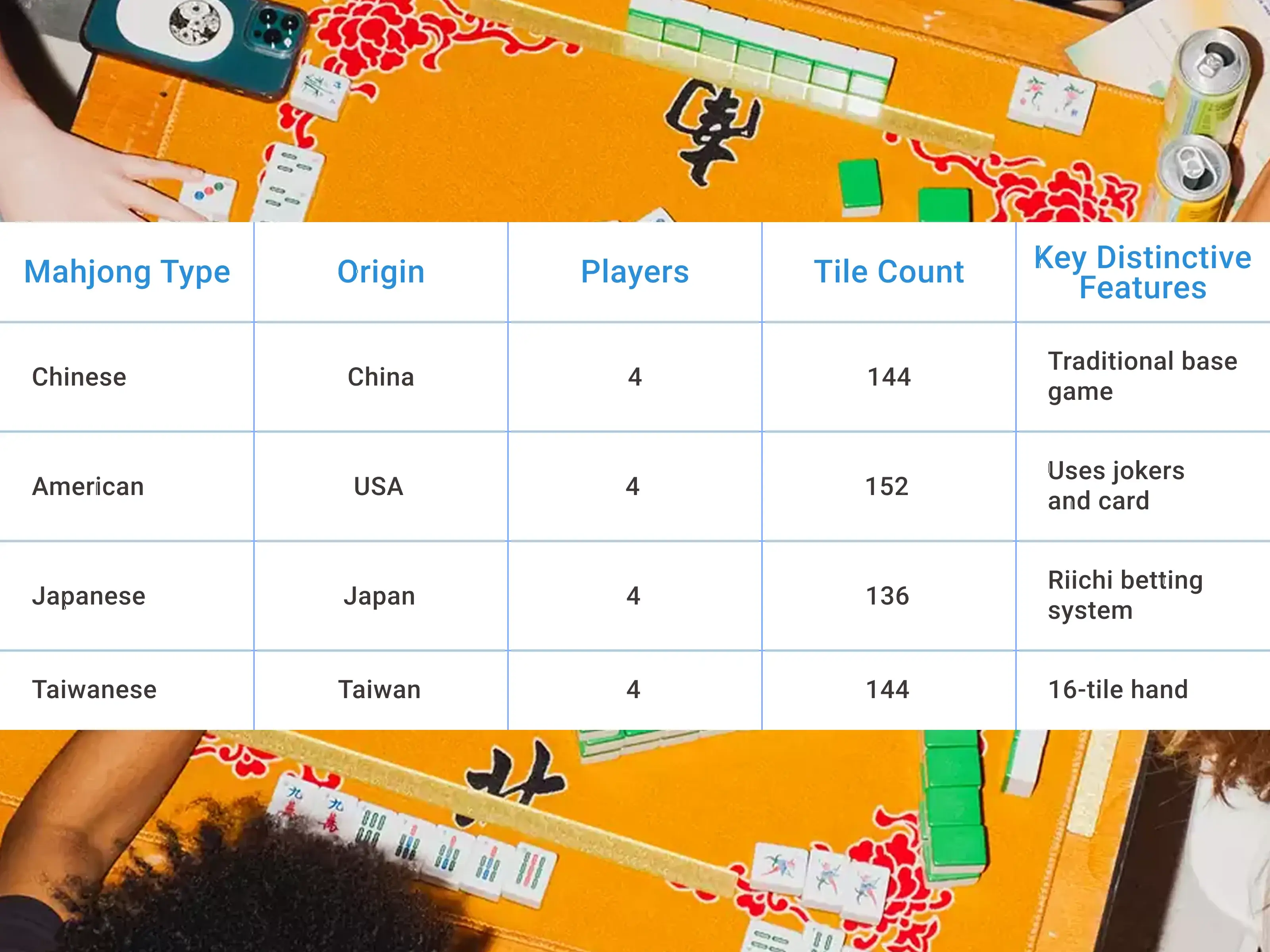
Mahjong Types Overview
Chinese
- Origin: China
- Players: 4
- Tile count: 144
- Key distinctive feature: Traditional base game
American
- Origin: USA
- Players: 4
- Tile count: 152
- Key distinctive feature: Uses jokers and card
Japanese
- Origin: Japan
- Players: 4
- Tile count: 136
- Key distinctive feature: Riichi betting system
Taiwanese
- Origin: Taiwan
- Players: 4
- Tile count: 144
- Key distinctive feature: 16-tile hand
What Is Mahjong and Why So Many Variations
Mahjong originated in 19th century China during the Qing Dynasty. The core gameplay involves drawing and discarding tiles to form sets, a principle that remains consistent across all variants. As the game spread globally, it naturally evolved to accommodate different cultural preferences and playing styles.
Several factors influenced mahjong's evolution into distinct variants:
- Geographic spread: As the game traveled across Asia and later to Western countries, each region adapted it to local tastes.
- Cultural adaptation: Different communities incorporated their own customs and traditions into the rules.
- Standardization efforts: Various organizations in different countries formalized their own rules.
- Gaming preferences: Some cultures emphasized luck, others skill; some preferred simplicity, others complexity.
Classical Mahjong and Traditional Gameplay
The original Chinese mahjong forms the foundation for all other variants. It uses 144 tiles divided into suits (bamboos, dots, characters), honors (winds and dragons), and bonus tiles (flowers and seasons). Players take turns drawing and discarding tiles to form legal hands, with traditional scoring based on hand complexity.
1. Chinese Style
Chinese Official mahjong, established by China's State Sports Commission in 1998, features standardized rules and a formal scoring system. According to the World Mahjong Organization, this variant emphasizes balanced play and strategic depth.
Key components:
- Traditional tile set includes dots, bamboos, characters, winds, and dragons
- Players form hands with 13 tiles, drawing a 14th to win
- Common combinations include pungs (three identical tiles), kongs (four identical tiles), and chows (three consecutive tiles)
- Scoring rewards complexity with hands like "All Pungs" earning significantly more points
- Fan-based scoring system with 81 different patterns recognized in competitive play
2. Hong Kong Style
Hong Kong mahjong is widely played and known for its simplified scoring compared to mainland Chinese versions. This variant has been featured in numerous films and media, contributing to its international recognition.
Key components:
- Streamlined rules with fewer bonus tiles
- More straightforward scoring system ideal for casual play
- Significant cultural importance in Hong Kong
- Known for faster gameplay with an average game lasting 15-20 minutes per round
American vs Chinese Mahjong Differences
American mahjong has evolved significantly from its Chinese origins, with substantial differences in rules, equipment, and gameplay philosophy. You can learn both styles by playing online at TheMahjong.com, where our digital adaptations preserve the authentic feel of each variant.
Key differences include:
- Tile set: American mahjong uses 152 tiles including jokers, while Chinese uses 144 tiles without jokers
- Winning patterns: American mahjong requires matching specific patterns from an annual card published by the National Mah Jongg League
- The Charleston: American mahjong features a unique passing ritual at the start of each game
- Scoring system: American mahjong uses pattern-based scoring rather than traditional point calculations
- Cultural context: American mahjong has strong ties to Jewish-American women's social clubs since the 1920s
Japanese Riichi and Other Asian Game Mahjong Variants
Japanese Riichi mahjong stands out for its unique rules and competitive structure, while other Asian variants add further diversity to the game.
1. Japanese Riichi
Japanese Riichi mahjong has gained international popularity due to its strategic depth and organized competitive play. The Japan Professional Mahjong League established standardized rules that have been adopted worldwide.
Key components:
- The riichi declaration allows players to bet on their hand, adding strategic tension
- Dora indicators provide bonus points for certain tiles
- Yaku system requires specific patterns for a legal win, with at least one yaku needed
- Red five tiles add bonus points
- Defensive play is highly valued, with skilled players knowing when to fold their hand
2. Taiwanese Style
Taiwanese mahjong features a distinctive 16-tile hand structure that changes gameplay strategy compared to other variants.
Key components:
- Players build hands with 16 tiles instead of the usual 13
- Special winning combinations unique to Taiwan
- Larger hand size creates different strategic possibilities
- Strong cultural significance in Taiwanese society
- Distinctive "flower" betting system that increases stakes throughout the game
Which Version of Mahjong Is Most Popular?
The popularity of mahjong variants varies significantly by region and context. Chinese and Hong Kong variants have the largest global player base, while Japanese Riichi dominates competitive tournament play. The World Mahjong Organization recognizes multiple official competitive formats.
Popularity factors include:
- Regional dominance: Each variant prevails in its country of origin
- Online presence: Japanese Riichi and Chinese variants have strong digital communities
- Tournament activity: The World Mahjong Championship features both Chinese Official rules and Riichi competitions
- Growth trends: Online platforms like TheMahjong.com introduce new players to various styles
Mahjong Patterns and Winning Hands Across Styles
Each mahjong variant has its own definition of a winning hand, though many share similar basic components.
1. Common Melds and Sets
Most mahjong styles use similar building blocks for hands, but combine them differently:
Key components:
- Pung: Three identical tiles (e.g., three 5 of dots)
- Kong: Four identical tiles (e.g., four west winds)
- Chow: Three consecutive tiles of the same suit (e.g., 3-4-5 of bamboo)
- Pair: Two identical tiles (e.g., two red dragons)
- In Chinese mahjong, a standard winning hand consists of four melds plus one pair
2. Special Hands
Each variant features unique special hands and rare combinations that often score highly:
Key components:
- Chinese mahjong includes hands like "Seven Pairs" and "Thirteen Orphans"
- American mahjong features complex patterns that change annually with the NMJL card
- Japanese Riichi has limit hands (yakuman) such as "Four Concealed Triplets"
- Taiwanese mahjong offers unique winning patterns due to its 16-tile hand structure
Jewish Mahjong vs Chinese Mahjong
American mahjong developed a strong following in Jewish-American communities, particularly among women's social groups, leading to unique adaptations that continue to this day.
Key distinctions include:
- Historical context: The game became a popular pastime in Jewish-American communities in the early 20th century
- Rule adaptations: The National Mah Jongg League, founded in 1937, established standardized American rules
- Social function: Mahjong serves as a social and cultural tradition, especially among women
- Modern practice: Annual rule cards published by the NMJL define the winning patterns
Mahjong Types Around The World
Mahjong's global appeal is reflected in its many variants. At TheMahjong.com, we've created digital versions that maintain the authentic spirit of traditional mahjong while making it accessible to players of all experience levels.
For a unique mahjong experience, try the ceremonial free mahjong game on our platform, which offers a simplified version perfect for learning the basics. Our digital adaptation features traditional tile designs and authentic gameplay mechanics.
Game duration varies by style: Chinese games typically last 20-30 minutes per round, American games take 45-60 minutes, and Japanese Riichi tournaments often allocate 90 minutes per session. Professional players compete in organized tournaments in Japan and China, with the World Mahjong Championship bringing together top players from around the globe.
TheMahjong.com offers mahjong solitaire with over 200 layouts, featuring the beautiful traditional tiles and engaging gameplay. Our platform is optimized for both desktop and mobile play, making it easy to enjoy this classic game wherever you are. Whether you're interested in learning traditional mahjong or prefer the solitaire variant, our carefully designed digital adaptations provide an authentic and accessible experience.
FAQs About Mahjong Types
What is the easiest type of mahjong for beginners to learn?
Hong Kong mahjong is generally considered the most beginner-friendly variant due to its simplified scoring system and straightforward rules. American mahjong is also accessible for newcomers, as the annual card clearly defines winning patterns. Both styles offer less complexity than Chinese Official or Japanese Riichi mahjong.
Can players of different mahjong styles play together?
Players from different mahjong traditions cannot easily play together without agreeing on a common ruleset first. The variants differ significantly in tile counts, scoring systems, and winning conditions. However, players familiar with one style can typically learn another variant's rules with some practice and adaptation.
How long does a typical mahjong game take in different variants?
Game duration varies considerably by style. Hong Kong mahjong rounds average 15-20 minutes, Chinese games typically last 20-30 minutes per round, American games take 45-60 minutes, and Japanese Riichi tournament sessions often allocate 90 minutes. Casual play generally moves faster than competitive matches.
Are there professional mahjong players?
Yes, professional mahjong players exist, particularly in Japan and China. The Japan Professional Mahjong League organizes competitive play with ranked professionals. China hosts national tournaments with professional competitors. The World Mahjong Championship brings together top players globally, featuring both Chinese Official rules and Riichi competitions.
What is the newest type of mahjong?
Chinese Official mahjong, standardized by China's State Sports Commission in 1998, represents one of the newest formalized variants. Digital adaptations and online platforms continue to introduce modified rulesets, but these typically build upon existing traditional variants rather than creating entirely new styles of play.
Other Mahjong News
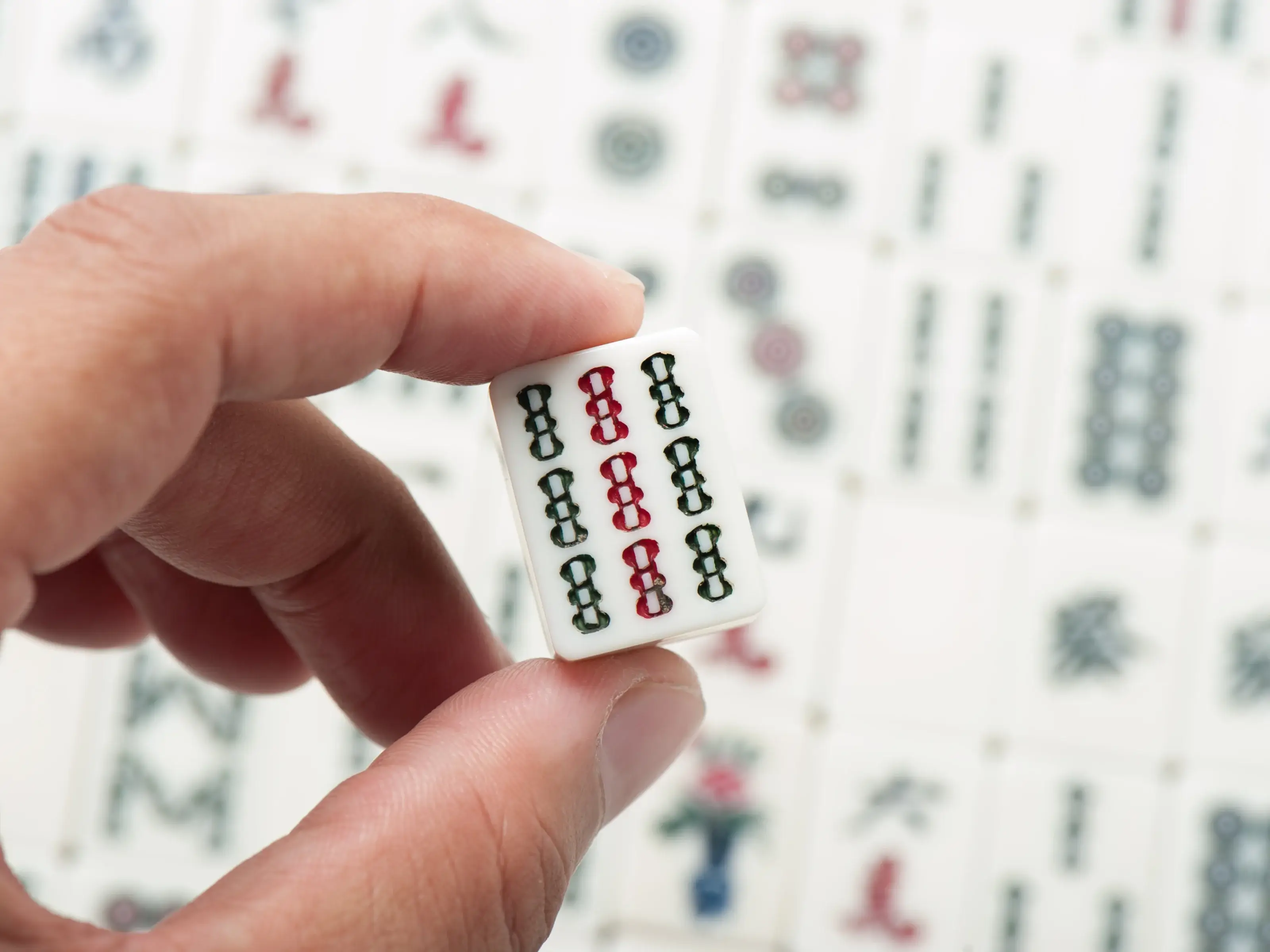
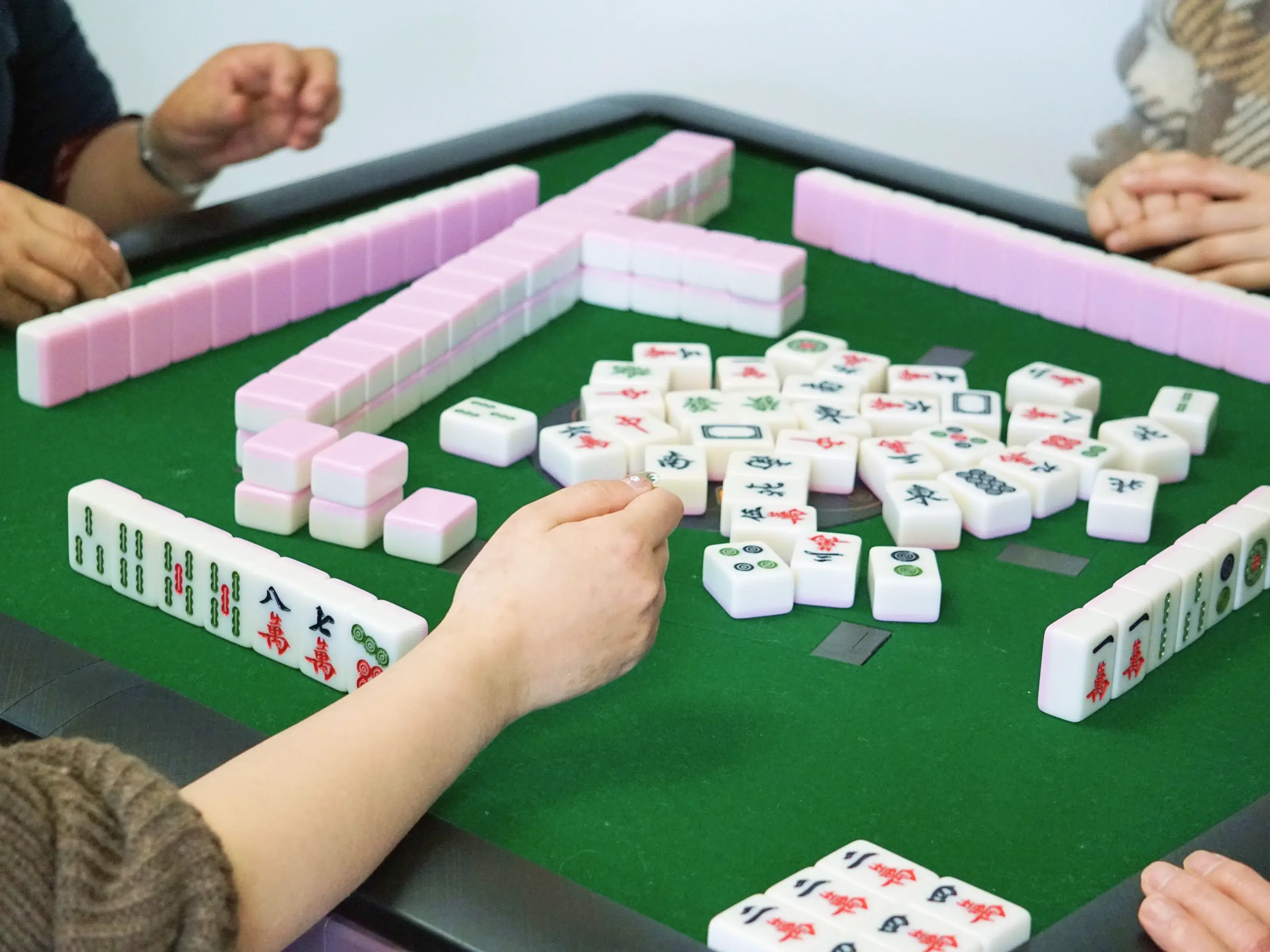
Try out the Mahjong gameplay practices on TheMahjong.com
Playing Mahjong at TheMahjong.com offers not just an interesting and exciting pastime, but also an excellent way to improve cognitive skills. Here, you can refine your logical thinking, planning, and visual perception. We invite you to discover this unique world of Mahjong Solitaire and dive into an exciting adventure at TheMahjong.com!