
Mahjong Wall Setup: Step-by-Step Instructions

Setting up a mahjong game properly is essential for an authentic playing experience. The traditional wall setup forms the foundation of every mahjong game, creating structure and ensuring randomness in tile distribution. This comprehensive guide will help both beginners and experienced players master the art of mahjong wall setup.
Preparing Your Mahjong Tiles
A complete mahjong set typically contains 144 tiles in a standard Chinese set, though the number may vary depending on the mahjong variant. Proper preparation of your mahjong tiles is essential for fair gameplay and ensures everyone is playing by the same mahjong rules. The tiles are divided into three main categories: suits (Bamboos, Characters, Dots), honors (Winds and Dragons), and bonus tiles (Flowers and Seasons). Understanding these categories is foundational to learning how to set up a mahjong game
- Always check that all tiles are present before starting.
- Different mahjong variants (Chinese, Japanese, American) may have different tile counts.
- Proper mahjong wall setup is crucial for traditional gameplay and ensures a fair start.
Expert Tip: New tiles may have a slight powdery residue that makes shuffling difficult. Wipe them gently with a soft cloth before first use to improve handling.
1. Shuffle Face-Down Tiles
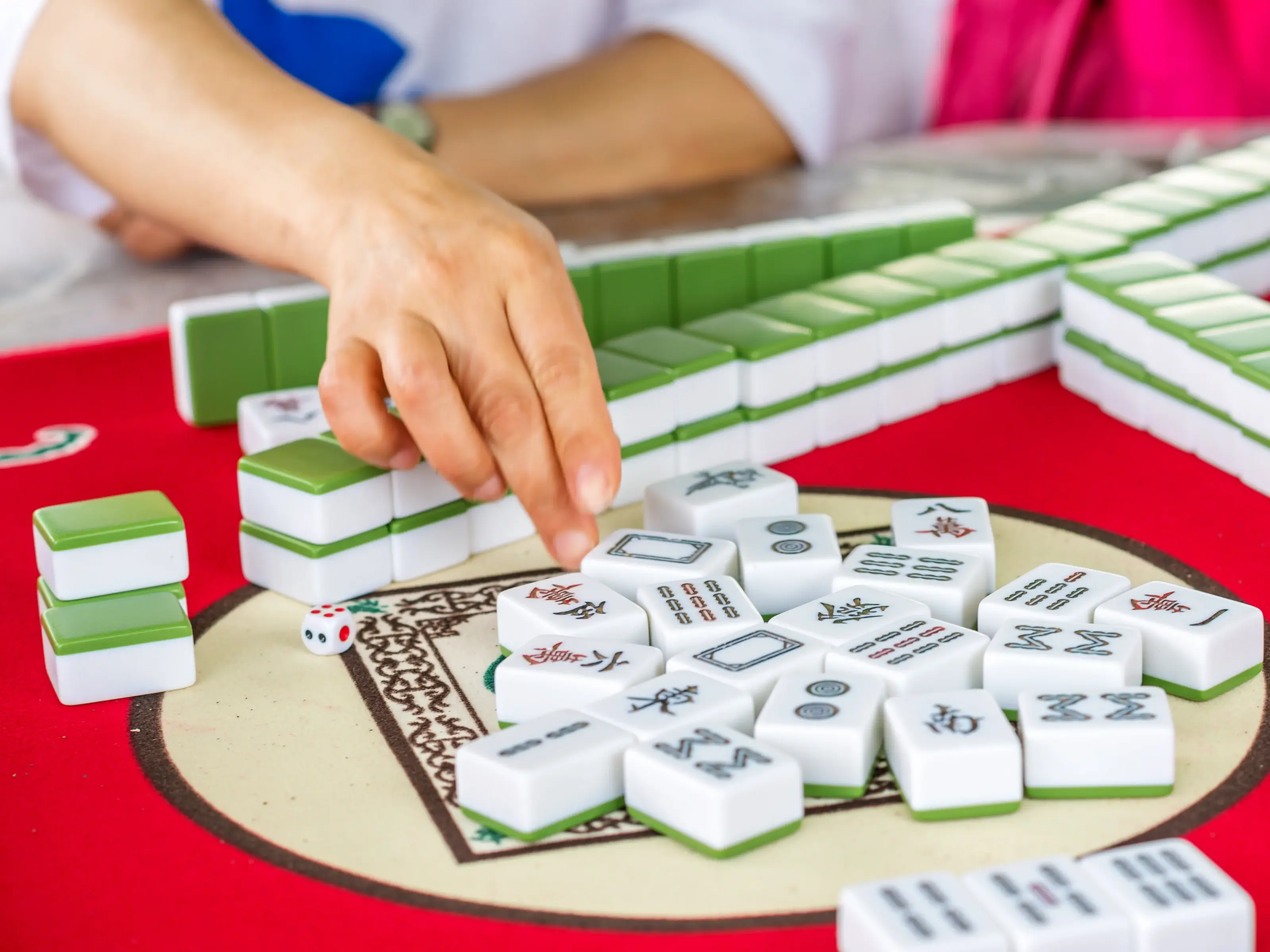
To ensure randomness, all players should participate in shuffling the tiles.
- Use the "washing" technique: spread all tiles face-down on the table and mix them in circular motions.
- Shuffle for 1–2 minutes to thoroughly mix the tiles.
- Prevent tiles from flipping face-up by using gentle, overlapping hand motions and keeping tiles close together.
2. Confirm Tile Count
Before building the walls, confirm you have the correct number of tiles.
1. Standard tile breakdown:
- Suits (Bamboos, Characters, Dots): 36 tiles each
- Honors (Winds and Dragons): 28 tiles
- Bonus tiles (Flowers and Seasons): 8 tiles
2. To quickly verify, group tiles by category and count stacks rather than individual tiles.
Building The Traditional Walls
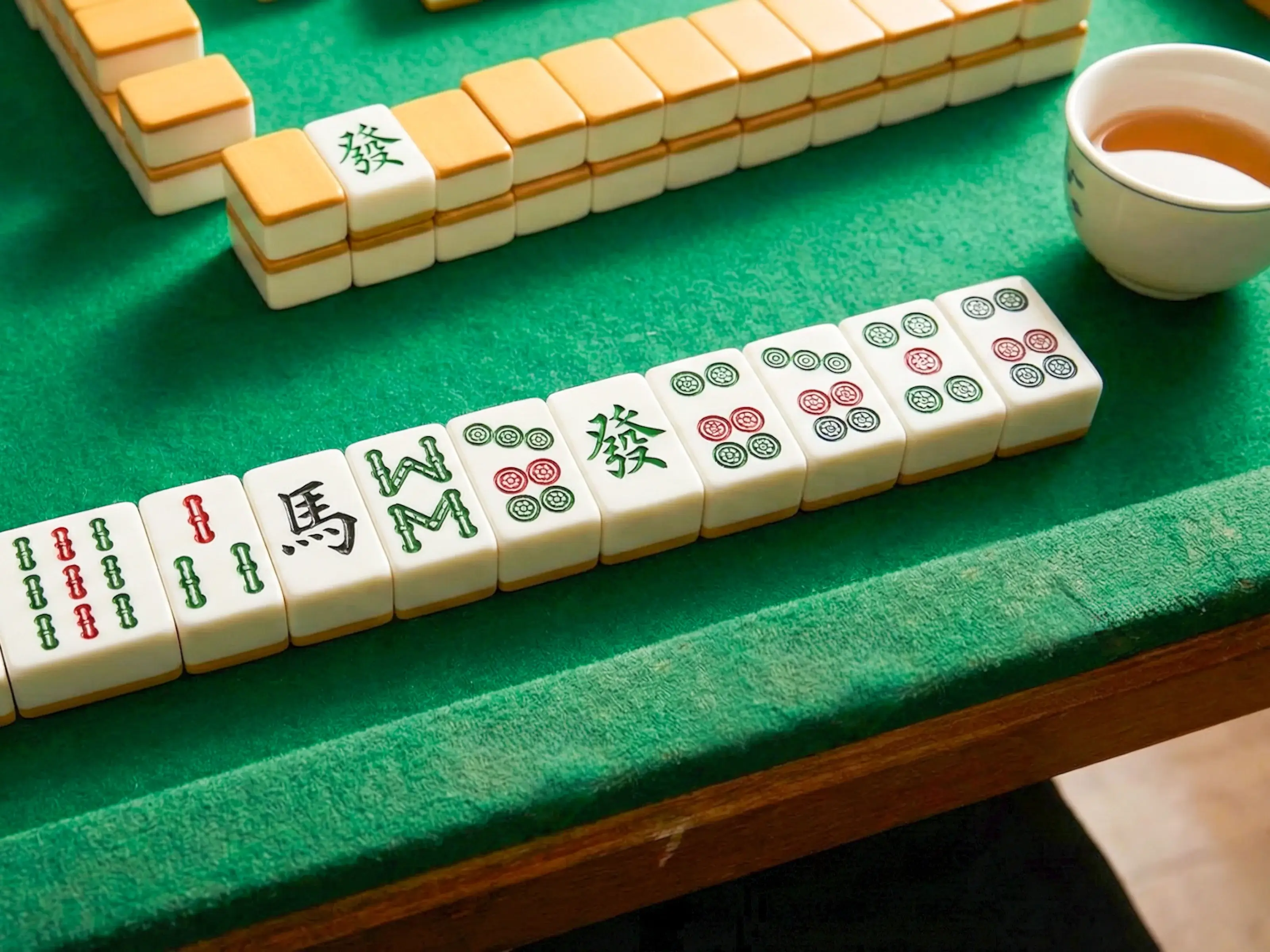
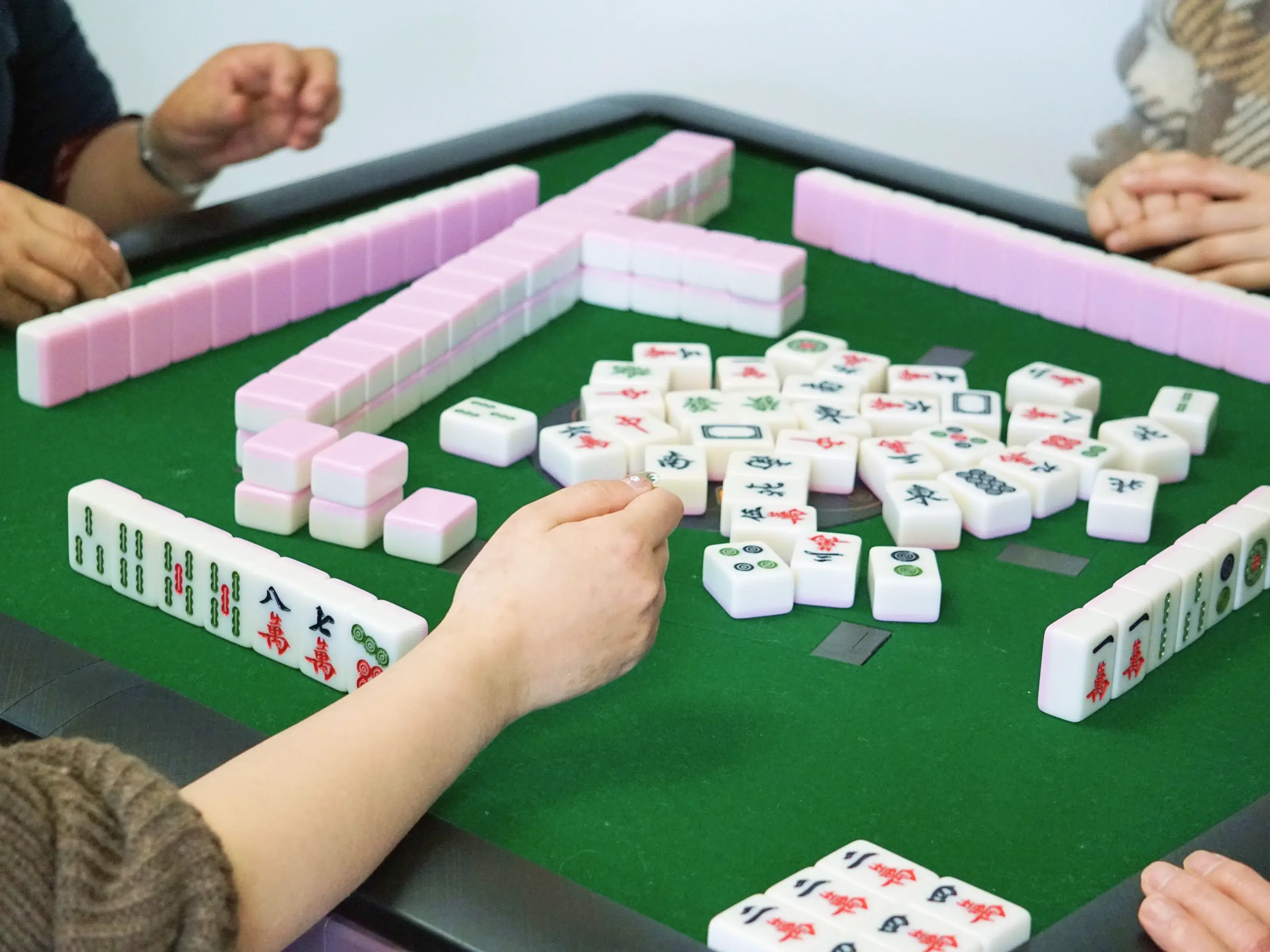
The mahjong setup involves building four walls of tiles, stacked two high, to form a square enclosure. This traditional formation is central to playing mahjong with 4 players and is a key part of the setup instructions.
- The standard wall consists of tiles stacked two high.
- The four walls are arranged in a square, creating the playing area.
- Wall dimensions differ by variant:
- Chinese: 18 tiles long (36 tiles per wall)
- American: 19 tiles long (38 tiles per wall)
- Japanese: 17 tiles long (34 tiles per wall)
Historical Context: The square wall formation dates back to the original Chinese game and symbolizes protection of the game's integrity. This careful setup ritual helps players transition mentally into the game space.
1. Stack Tiles Two High
Follow these steps for stable wall construction:
- Arrange tiles in a straight line, face down.
- Place a second row of tiles directly on top of the first.
- Ensure tiles are aligned neatly for stability.
Step-by-step:
- Step 1: Place tiles face down in a row.
- Step 2: Create a second row directly on top.
- Step 3: Ensure tiles are aligned neatly.
Common Challenge: Uneven surfaces can cause walls to collapse. If playing on a textured or soft surface, consider using a tablecloth or game mat for stability.
2. Form a Square Enclosure
Combine the four walls to create the playing space.
- Each player builds their section of the wall in front of them.
- Position the walls to form a square or rectangle, with corners meeting neatly.
- Align walls carefully to avoid gaps or misalignment.
- At the "inner corners," ensure the ends of each wall touch to form a closed enclosure.
Determining Dealer and Breaking The Wall
Selecting the dealer and breaking the wall are crucial steps in starting the game according to mahjong rules.
- The dealer (East) has a special role and is determined before play begins.
- Traditional methods for dealer selection include dice rolls or drawing wind tiles.
- The dice roll also determines where the wall will be broken to start drawing tiles.
Expert Insight: The breaking of the wall introduces an element of chance that balances skill in mahjong. This randomness ensures that even highly skilled players must adapt to unpredictable starting conditions.
1. Roll Dice To Select Dealer
Use the following procedure to select the dealer:
- Each player rolls dice; the highest roller becomes "East" (the dealer).
- Alternative methods include drawing wind tiles or using pre-set seating.
- Dealer position rotates counterclockwise after each game.
2. Count Stacks and Open The Wall
Break the wall based on the dealer's dice roll.
- The dealer rolls two dice and adds the total.
- Count that number of stacks (each stack is two tiles high) from the right edge of the dealer's wall, moving left.
- Break the wall at that point; this is where tile drawing begins.
Dice Roll Total → Stack to Break (from dealer’s right)
- 5 → 5th stack
- 8 → 8th stack
- 12 → 12th stack
Handling Flower And Joker Tiles
Special tiles like flowers, seasons, and jokers are handled differently depending on the mahjong variant. When playing themed layouts like Irish Castle Mahjong, you'll notice how these special tiles add visual interest and additional gameplay elements.
- These tiles may affect the wall length, especially in American and Japanese mahjong.
- Flower and season tiles are drawn and replaced during setup if drawn into a player's initial hand.
- Jokers are used in American mahjong and have unique rules for replacement and use.
- Chinese mahjong uses flower and season tiles, Japanese mahjong may use red fives, and American mahjong uses jokers.
Variant-Specific Detail: In competitive Chinese mahjong, exposed flower tiles are placed to the right of the player, while in American mahjong, they may be arranged differently according to the National Mah Jongg League rules.
Starting The Game
Proper mahjong setup procedures ensure a fair and enjoyable start to the game.
- Wall construction determines the order and method of tile drawing.
- The initial draw sequence is essential to mahjong instructions and gameplay flow.
- A brief overview of mahjong rules: players draw and discard tiles to form winning hands.
1. Deal Initial Hands
Deal tiles from the broken wall as follows:
- Players draw tiles in a counterclockwise order, starting from the dealer.
- Each player receives 13 tiles (dealer gets 14 in some variants).
- The sequence and number of tiles may vary by variant (e.g., American mahjong uses 13 tiles, Japanese uses 13, dealer gets 14).
- Always draw in the correct order to maintain fairness.
Pro Tip: When drawing tiles, take them from the top row first, then the bottom row. This prevents wall collapse and maintains the traditional drawing pattern.
2. Begin Drawing And Discarding
Gameplay proceeds as follows:
- Players continue to draw tiles from the wall in turn.
- Drawing order is counterclockwise.
- The wall gradually diminishes as tiles are drawn.
- Basic gameplay sequence:
- Draw: Take a tile from the wall
- Evaluate: Consider how it fits your hand
- Discard: Remove an unwanted tile
- Continue: Next player's turn
Alternative Setup Options
The traditional wall setup adds authenticity to your mahjong experience, but alternatives exist for different situations.
For casual play, tiles can be shuffled and placed in a pile instead of building walls. Some players skip the formal wall for convenience, but this may affect certain game rules.
Traditional Wall
Pros:
- Authentic
- Organized
- Prevents cheating
Cons:
- Takes time to set up
- Needs space
Simple Pile
Pros:
- Quick
- Easy for beginners
Cons:
- Less organized
- May affect some rules
Player Benefit: Traditional setup creates a ritual that helps focus players' attention and signals the transition to gameplay. Many experienced players report this ritual enhances the overall game experience.
Online Mahjong Options
If you want to practice mahjong setup or gameplay without physical tiles, online options provide convenience and accessibility. Temple Mahjong offers a beautiful digital environment to enjoy the game without worrying about physical setup.
- Online mahjong platforms handle wall setup automatically, letting you focus on learning how to play mahjong with 4 players.
- Benefits include convenience, instant setup, and the ability to play anytime.
- TheMahjong.com offers a free online mahjong experience, perfect for beginners.
- Playing online helps you understand mahjong rules and mechanics in a guided environment.
When learning mahjong wall setup, remember that practice makes perfect. Whether you choose traditional physical play or online options, the structure and order of the game remain the same. With time and experience, setting up the walls will become second nature, allowing you to focus on strategy and enjoyment.
Frequently Asked Questions
How many tiles should be in each wall for traditional mahjong?
In traditional Chinese mahjong, each wall consists of 36 tiles arranged in a line 18 stacks long, with each stack being two tiles high. However, the exact number varies by variant: American mahjong uses 38 tiles per wall (19 stacks), while Japanese mahjong uses 34 tiles per wall (17 stacks). The total number of tiles in your set determines the wall length, so always verify your variant's requirements before building the walls.
What direction should players draw tiles from the wall?
Players draw tiles in a counterclockwise direction, starting from the dealer (East position). After the wall is broken based on the dice roll, tiles are drawn from left to right along the wall, taking from the top row first, then the bottom row of each stack. This systematic approach maintains fairness and follows traditional mahjong protocol. When one wall section is depleted, drawing continues seamlessly to the next player's wall section in counterclockwise order.
What happens if a tile gets flipped during wall building?
If a tile accidentally flips face-up during wall construction, simply turn it back face-down and continue building. The shuffling process ensures randomness, so a briefly exposed tile doesn't compromise game integrity. However, if multiple tiles are exposed or players see tiles during the dealing phase, it's best practice to reshuffle all tiles and rebuild the walls to maintain fairness. In tournament play, stricter rules may apply, potentially requiring a complete restart if tiles are exposed after the wall break.
Can I play mahjong without building the traditional wall?
Yes, you can play mahjong without building the traditional wall, though this approach is better suited for casual games. Alternative methods include shuffling tiles face-down in a central pile and drawing from there, or using automatic shuffling machines common in modern mahjong parlors. While these shortcuts save setup time, they eliminate certain traditional elements like the wall-breaking ritual and may affect specific rules that reference wall position. For authentic gameplay and tournament settings, the traditional wall setup remains the standard and adds ceremonial value to the game experience.
Other Mahjong News


Try out the Mahjong gameplay practices on TheMahjong.com
Playing Mahjong at TheMahjong.com offers not just an interesting and exciting pastime, but also an excellent way to improve cognitive skills. Here, you can refine your logical thinking, planning, and visual perception. We invite you to discover this unique world of Mahjong Solitaire and dive into an exciting adventure at TheMahjong.com!