
Mahjong for Beginners: 10 Common Mistakes to Avoid

Mahjong is a captivating game of skill that rewards strategic thinking and careful observation. New players often struggle with fundamental errors that hinder their progress and enjoyment. At TheMahjong.com, we've observed thousands of beginner games and identified the most common pitfalls that prevent new players from advancing. Our simplified version helps beginners learn proper techniques without developing bad habits that become difficult to correct later.
Why Understanding The Basics Matters
Mastering any game requires a solid foundation of knowledge, and Mahjong is no exception. Many newcomers attempt to skip ahead without fully grasping fundamental concepts, leading to consistent losses and growing frustration. The path to Mahjong proficiency starts with understanding the core mechanics rather than memorizing complex strategies.
The primary objective in Mahjong is building valid sets and pairs to form a complete hand. While different variants have their own unique rules, they all share common principles that every player must understand.
Every Mahjong player should know these essentials:
- Tile recognition: Understanding the different suits and special tiles (Bamboos, Characters, Dots, Winds, Dragons)
- Hand formation: How to build valid combinations (pairs, pungs, kongs, and sequences)
- Game flow: Understanding the sequence of play from initial deal through discards
- Scoring basics: How points are calculated in your chosen variant (including doubles and special hands)
Commitment To a Hand Early Instead of Staying Scattered
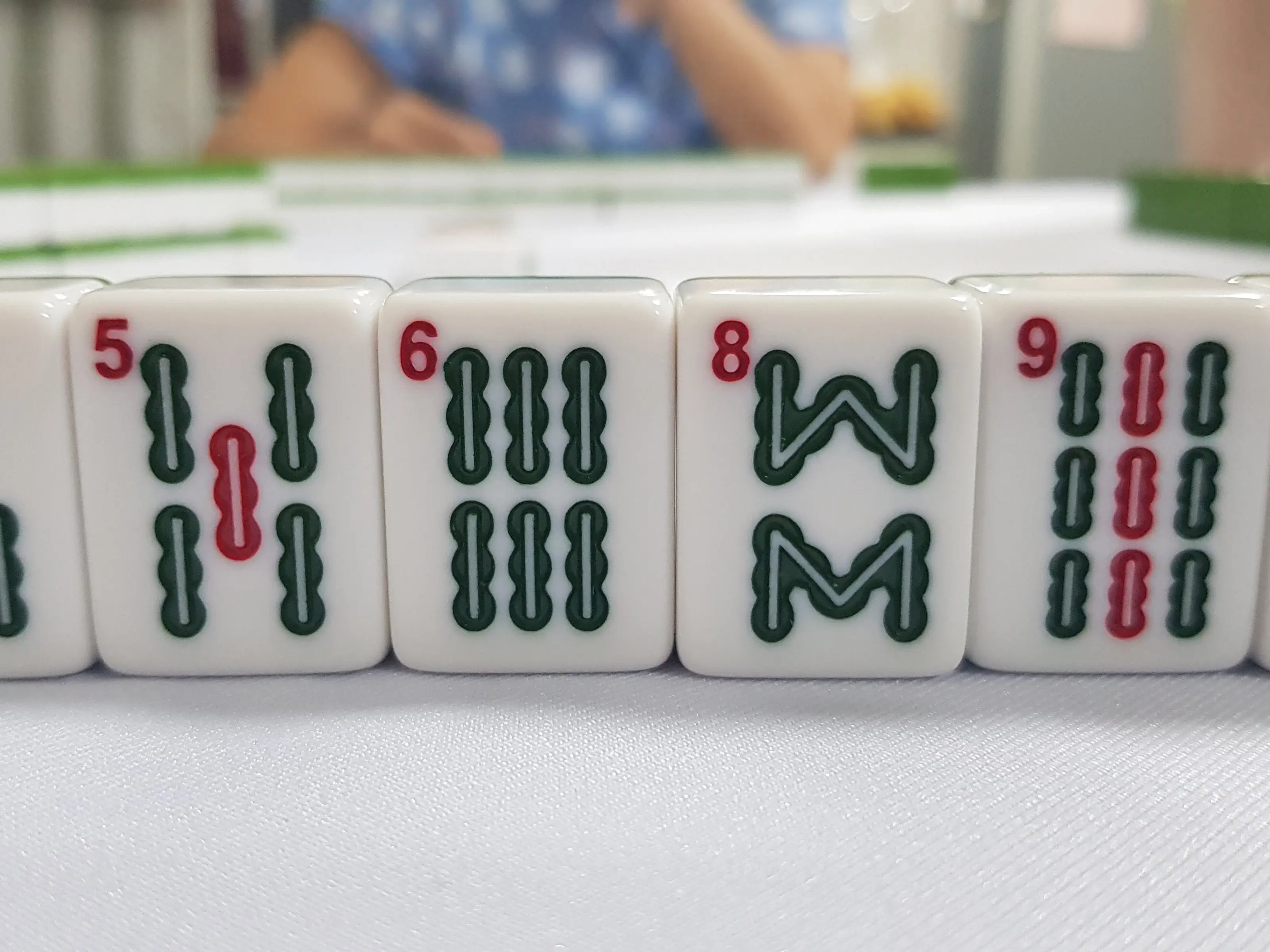
A classic beginner error is attempting to keep too many options open throughout the game. This indecisiveness leads to a scattered hand with little progress toward any specific pattern. For example, holding one of each dragon tile rather than focusing on building a viable sequence or pung in a single suit.
Efficiency in Mahjong comes from focus. By identifying a clear strategy and discarding tiles that don't contribute to it, you dramatically improve your chances of success. This concentrated approach is far more effective than attempting to build multiple incomplete patterns simultaneously.
When evaluating your initial tiles, look for these promising patterns:
- Look for pairs: Multiple tiles of the same value indicate potential for pungs or kongs
- Connected sequences: Consecutive numbers in the same suit (like 4-5-6 of dots)
- Matching suits: Concentrations in one suit suggest direction (five or more tiles in bamboo)
Common Errors With Charleston Passing
The Charleston is a distinctive element of American Mahjong where players pass tiles around the table in three rounds. This crucial phase often determines the trajectory of your entire game, as it helps shape your initial hand.
Rushing The First Pass
New players frequently rush through their first pass without properly evaluating their options. Take time to assess your initial tiles before deciding what to pass. Consider which tiles might form the foundation of a winning hand and which are unlikely to help your strategy. The most effective strategy is to retain pairs and potential sequences while passing isolated tiles.
Giving Away Sequences
Passing consecutive tiles to opponents is a common mistake that provides them with ready-made sequences. When you pass tiles like the 3-4 of bamboo, you're potentially giving another player exactly what they need to complete a set. This is especially dangerous early in the game when hands are still forming.
Instead, try to pass tiles from different suits or non-consecutive values to minimize the chance of helping your opponents. Breaking up potential sequences in your passes disrupts your opponents' ability to form hands quickly.
Forgetting Blind Pass Nuances
The blind pass phase confuses many beginners who misunderstand its purpose and execution. During this phase, tiles are passed across the table without seeing what you'll receive in return. This creates both opportunity and risk.
Many players incorrectly believe they must participate in the blind pass. In American Mahjong, you can choose to pass or not during this phase by saying "same" and returning the tiles you received. Understanding this option gives you strategic flexibility when your hand is developing well.
Misusing Jokers and Special Tiles
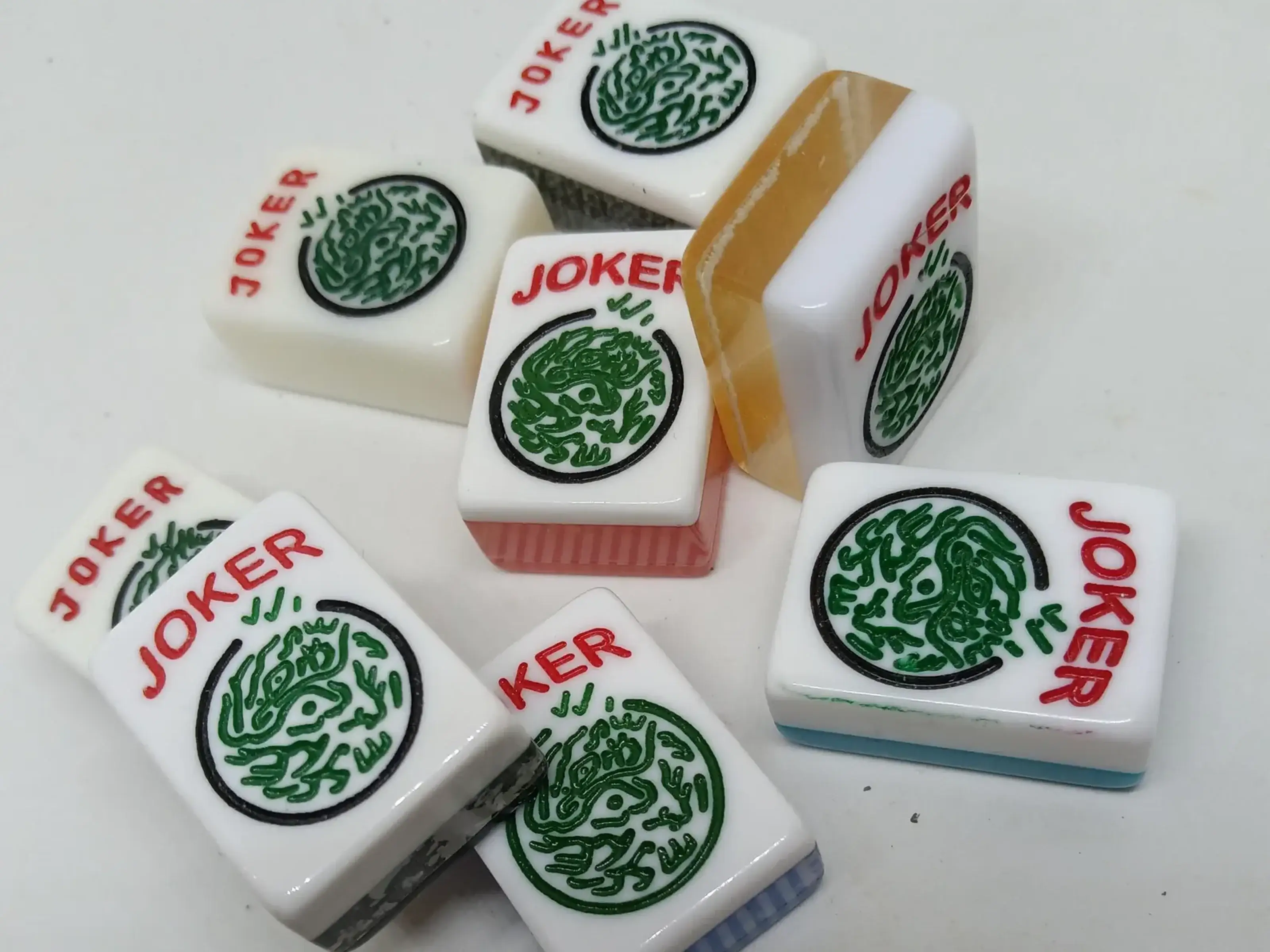
Jokers add versatility to Mahjong but come with specific usage rules that beginners often misunderstand. Their proper use can dramatically improve your chances of completing challenging hands.
Playing Jokers In Pairs
One of the most common rules misunderstandings involves using jokers in pairs. In American Mahjong, jokers cannot be used in pairs or single tiles—they may only replace tiles in pungs, kongs, and quints. This restriction prevents players from using jokers as universal replacements for any needed tile.
Our bug free Mahjong version helps players practice proper joker usage in a controlled environment where illegal moves are automatically prevented, allowing you to develop correct habits from the start.
Overlooking Joker Exchange
Many beginners fail to capitalize on the joker exchange rule, which allows players to swap a natural tile for a joker used in an exposed set. This powerful move lets you reclaim jokers for use in your own hand.
For example, if an opponent has exposed a pung of 8 Characters using two natural tiles and one joker, drawing the third 8 Character allows you to exchange it for the joker. Tracking exposed jokers on the table creates opportunities to strengthen your hand significantly in the middle and late game.

Overlooking Opponents' Discards And Exposures
Mahjong is as much about information gathering as it is about tile manipulation. Beginners often focus exclusively on their own tiles while ignoring the valuable intelligence available from monitoring others' actions.
Discarding Key Tiles
Carelessly discarding tiles that help opponents is a common beginner mistake. By tracking discards, you can avoid giving away exactly what another player needs to win. This defensive awareness becomes increasingly important as you face more experienced opponents.
Watch for these warning signs before discarding a tile:
- Tiles adjacent to exposed sets (like a 7 when 8-9 are exposed)
- Tiles matching the suit of exposed sets (more characters when character pungs are visible)
- Tiles that haven't been discarded yet (likely needed by opponents)
Ignoring Exposed Sets
Exposed sets reveal crucial information about your opponents' strategies. These visible commitments tell you which tiles they need and which are safe to discard. Beginners who ignore this information miss opportunities for both offensive advancement and defensive play.
By observing which sets opponents expose, you can deduce their likely hand patterns. For instance, if a player exposes a pung of East Winds, they may be building a hand with multiple wind pungs, making other wind tiles risky discards.
Holding Onto The Wrong Tiles For Too Long
Emotional attachment to tiles is a peculiar but common beginner trait. Players often hold onto tiles that have little chance of contributing to a winning hand, hoping for unlikely combinations instead of making practical discards.
"Dead" tiles—those that no longer contribute to your hand strategy—should be discarded promptly. Every turn spent holding these tiles reduces your options and slows your progress toward a winning hand.
Our popular Dragon Head Free Mahjong layout provides excellent practice for making quick discard decisions by presenting challenging tile arrangements that require strategic thinking.
Balance Between Speed and Value
Finding the balance between speed and value is a nuanced skill in Mahjong. Beginners typically fall into one of two traps: either rushing to complete any hand regardless of point value, or pursuing extremely high-value hands that are unlikely to materialize.
Understanding scoring is essential for making informed decisions about which hands to pursue. While quick, simple hands might win more frequently, they often score fewer points. Higher-value hands take longer to complete but offer better rewards.
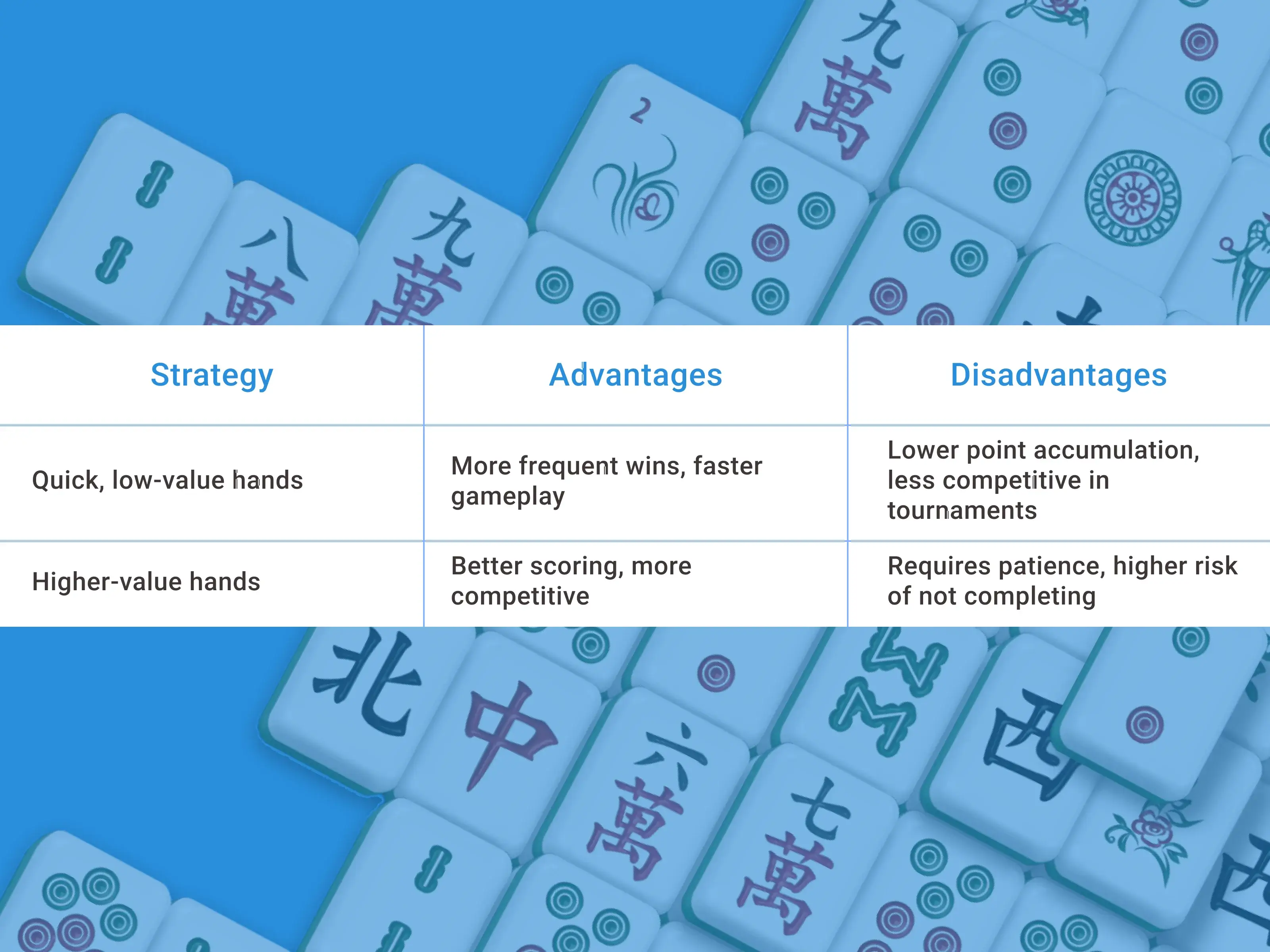
Quick, low-value hands
Advantages:
- More frequent wins
- Faster gameplay
Disadvantages:
- Lower point accumulation
- Less competitive in tournaments
Higher-value hands
Advantages:
- Better scoring
- More competitive
Disadvantages:
- Requires patience
- Higher risk of not completing
Confusion About Rules Across Mahjong Variants
Mahjong has evolved into numerous variants worldwide, each with distinct rules. Mixing rules from different variants creates confusion and inconsistent gameplay.
Mixing American and Chinese Rules
American and Chinese Mahjong differ significantly in both rules and strategy. American Mahjong uses jokers and a card of standard hands, while Chinese Mahjong focuses on creating specific patterns with a standard set of 13 tiles plus one drawn tile to win.
Beginners often inadvertently mix rules from different variants, creating hybrid games that don't align with either tradition. Choose one variant to learn thoroughly before exploring others to avoid this confusion.
Underestimating Simpler Versions
Many beginners jump directly to complex variants without mastering simpler versions first. This approach often leads to frustration and slower overall progress. Starting with a streamlined version like the one offered at TheMahjong.com builds fundamental skills that transfer to more complex variants.
The progression from simple to complex allows you to internalize basic patterns and strategies before adding additional rules. This graduated approach accelerates learning and builds confidence.
Proper Etiquette and Turn Order
Proper etiquette enhances the Mahjong experience for everyone involved. Beginners who overlook these social aspects often unwittingly disrupt game flow and create tension at the table.
Essential etiquette rules include:
- Proper tile handling (avoiding excessive noise or peeking at tiles)
- Announcing actions clearly ("pung," "kong," or "mahjong")
- Respecting turn order (waiting until previous player completes their action)
- Proper timing for calling tiles (acting promptly when claiming discards)
Maintaining good etiquette demonstrates respect for both the game and your fellow players. These social skills are as important as technical game knowledge for creating an enjoyable Mahjong experience.
Practice Makes Perfect
Every Mahjong master began as a beginner making these same mistakes. The path to proficiency involves recognizing and correcting these errors through consistent practice and observation. Making mistakes is an essential part of the learning process.
Regular practice in a low-pressure environment helps internalize proper strategies and techniques. TheMahjong.com offers an ideal platform to develop your skills without the pressure of live opponents. The site's user-friendly interface and varied layouts provide the perfect training ground for players at all levels.
Try playing mahjong online for free at TheMahjong.com to practice these skills in a relaxed environment.
FAQs About Mahjong Beginner Mistakes
What Is The Best Mahjong Variant For Complete Beginners?
Simplified Chinese Mahjong is ideal for beginners due to its straightforward rules and minimal special tiles. It focuses on fundamental concepts like building sequences and pungs without the complexity of jokers or extensive hand cards. Once you master basic tile recognition and hand formation, you can transition to American or other variants with confidence.
How Can I Practice Mahjong Strategy Without Regular Playing Partners?
Online platforms like TheMahjong.com offer excellent solo practice opportunities. Digital versions allow you to play at your own pace, experiment with different strategies, and learn from mistakes without social pressure. Additionally, studying hand patterns offline and analyzing professional games helps develop strategic thinking between playing sessions.
What Is The Most Important Skill To Master First In Mahjong?
Tile recognition and understanding valid hand combinations form the foundation of Mahjong proficiency. Before pursuing advanced strategies, you must instantly identify suits, recognize potential sequences, and understand how sets combine to form winning hands. This fundamental knowledge enables faster decision-making and strategic planning during actual gameplay.
How Long Does It Take To Become Proficient At Mahjong?
Most players achieve basic proficiency within 10-20 games, understanding rules and forming simple hands. Intermediate skill develops after 50-100 games with consistent practice. True mastery requires hundreds of games and ongoing study. Your learning speed depends on practice frequency, variant complexity, and willingness to analyze mistakes and adapt strategies.
Other Mahjong News


Try out the Mahjong gameplay practices on TheMahjong.com
Playing Mahjong at TheMahjong.com offers not just an interesting and exciting pastime, but also an excellent way to improve cognitive skills. Here, you can refine your logical thinking, planning, and visual perception. We invite you to discover this unique world of Mahjong Solitaire and dive into an exciting adventure at TheMahjong.com!